Bratislava
August 2019
There was no fuss getting to the Brno train station and because we had plenty of time prior to the train departing, we had time to dwell in the vicinity. Train stations can be untidy places and they can also attract unusual characters. Following are a few images of those frequenting the Brno station surrounds.

Early morning beer time.
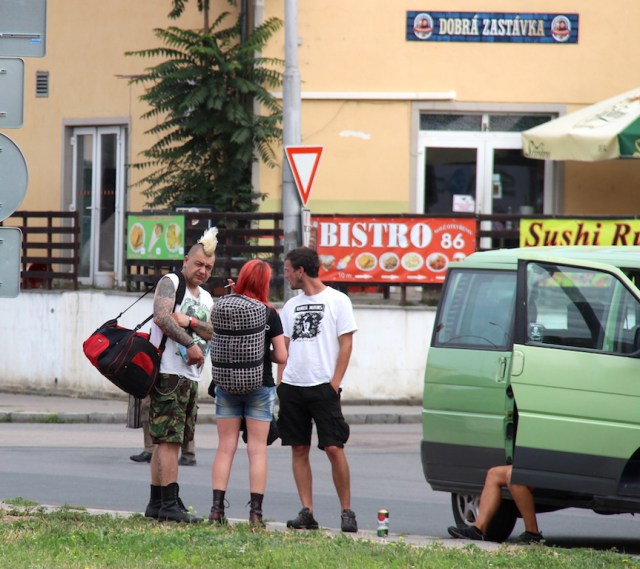
Cool haircut going somewhere.
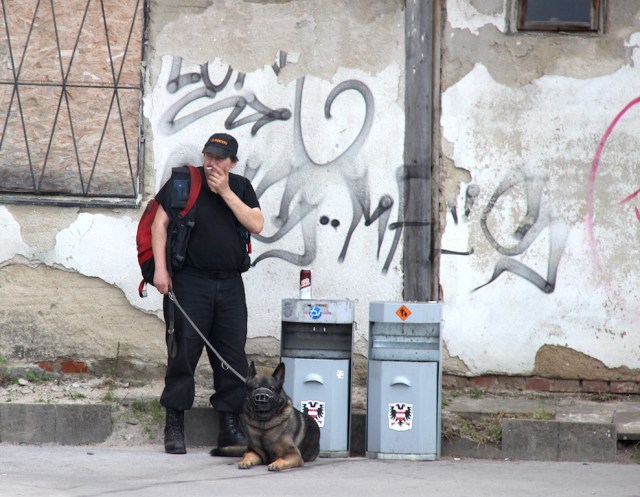
A man and his dog.
Surprisingly, each time a person walked by the man the dog lunged at them. Some might ask why one would own a dog with such an aggressive personality.
Getting to the platform the train was to leave from caused us concern, as the platform number was not displayed on the departure board. Travellers such as us with bikes need extra time to get to the designated platform, especially if you have to carry bikes and gear up and down steps. There was a lift but it was only big enough for one bike so I stood first in line at the lift and Bev stood by the display board and as soon as she had the platform number we knew our plan of action. Think about that for a moment: we have two fully loaded bikes, a lift that takes only one bike, we don’t know from which platform the train was to depart and it was only minutes to departure time. There was no way we would be able to coordinate ourselves and get on the train during its short time stop. I should add that the station we were at was temporary, the new Brno station was having an upgrade.
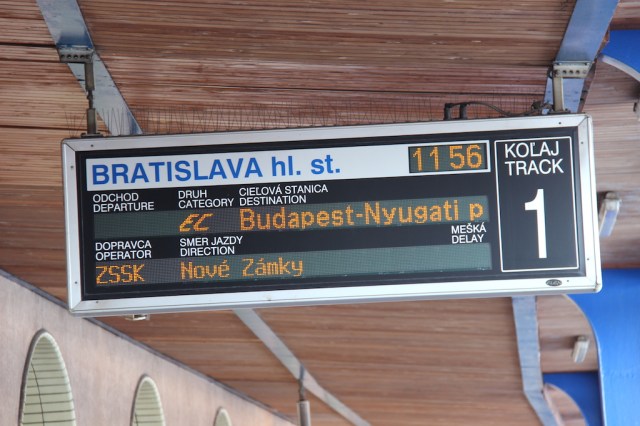
After a nail-biting wait, the track number finally appeared.
Jubilation! The train left from the platform we were waiting on, all we had to do was get the bikes up the step and into the train. A young man lifted the rear end of our bikes and we settled into the two-hour ride to Bratislava in Slovakia. The ride was memorable as we sat with the young man who helped us with our bikes and the first thing I noticed was the logo on his tee shirt, which read ‘Istanbul Showdown’.
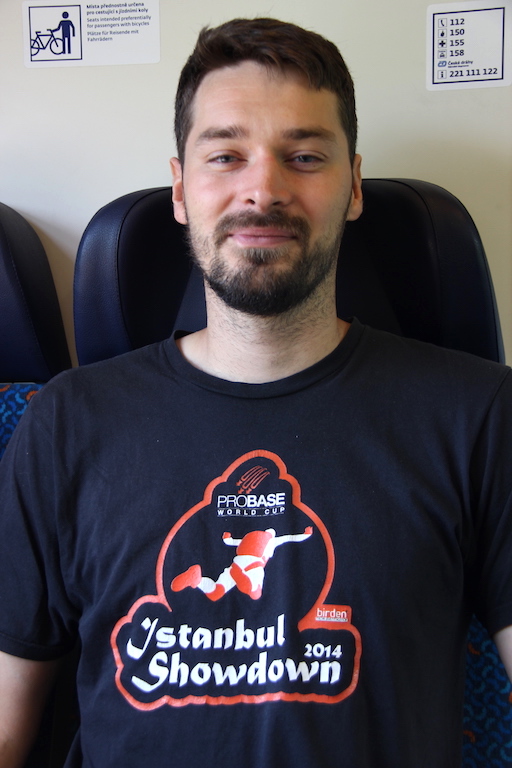
Karel, the BASE-jumper.
The 2014 Istanbul Showdown was a BASE-jumping competition. BASE-Jumping is where participants freefall from a base, usually a building, bridge, or cliff before their parachute opens and they glide to earth. “BASE” is an acronym that stands for four categories of fixed objects from which one can jump: buildings, antennae (referring to radio masts), spans (bridges), and earth (cliffs). (Wikipedia).
In Turkey, BASE-jumping is backed by the Ministry of Culture as a way of promoting extreme sports and tourism in that country. It is considered to be one of the most dangerous of extreme sports and is generally illegal in most countries. In countries where BASE-jumping is illegal jumps from buildings and towers are done covertly.
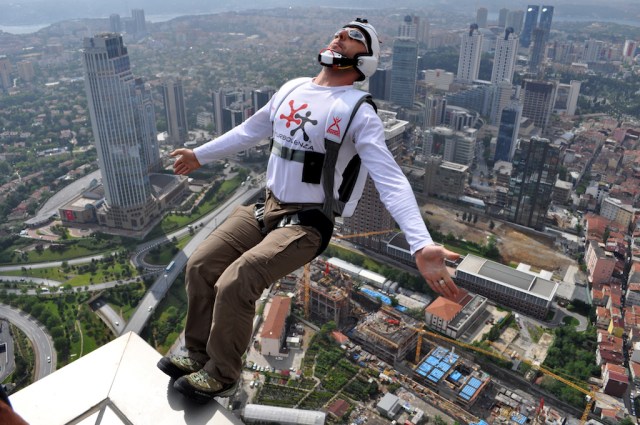
Going over the edge from the Sapphire Tower in Istanbul during Probase Sapphire Showdown.
Image credit: Konitizas Dimitrios via Wikipedia.
Karel, our travelling companion, works with electron microscopes and I discussed with him the ins and outs of working with them. One third of the world’s microscopes are made in the Czech Republic so there was a fair chance we would meet someone involved with the manufacture.
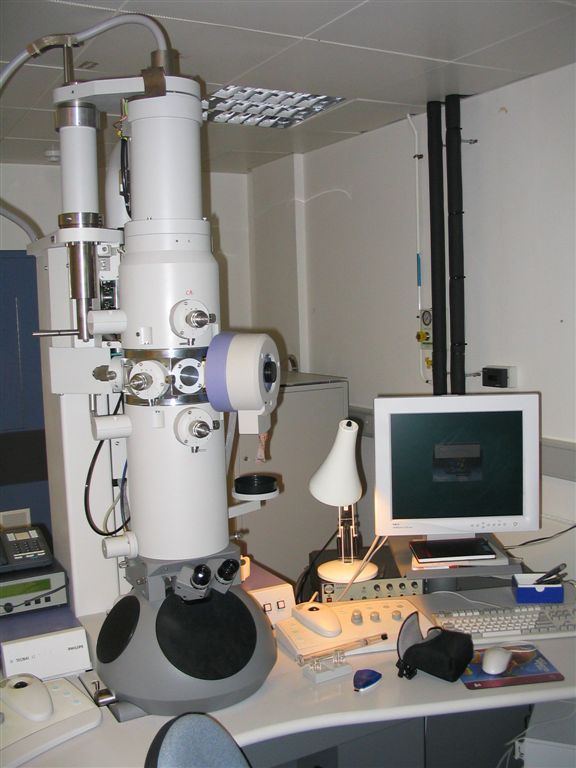
Philips FEI Electron Microscope. Image credit: David J Morgan Cambridge UK. Via Wikimedia.
The price of a modern electron microscope can be as much as $10 million depending on customization but the average cost is around $3 million.
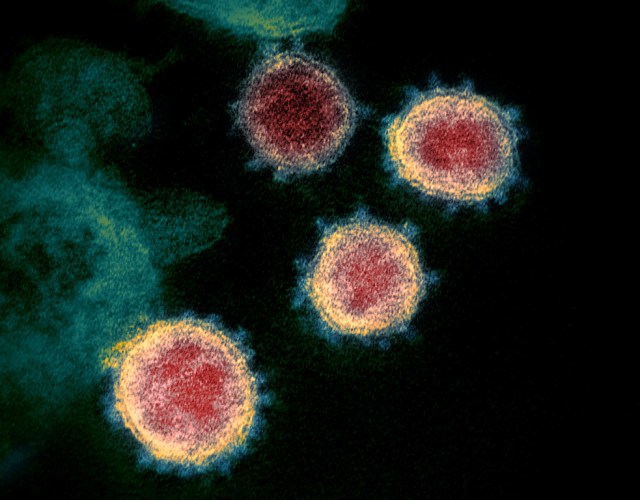
An electron microscope image of the virus that causes COVID-19. Image credit NIAID-RML via Wikimedia
To quote Wikipedia relative to the above image: ‘This colorized transmission electro microscope image shows SARS-CoV-2- also known as 2019-nCoV, the virus that causes COVID-19…the protruding capsid structures (so-called Spike protein) of the virus give these viruses their name, corona being the term for crown in Latin’.
A capsid is the protein shell of a virus, enclosing its genetic material.
When reading about the invention of the electron microscope I came across a reference to the first reading/magnifying aids and I quote Science Learning Hub: 710 BC the Nimrud lens, a piece of rock crystal that may have been used as a magnifying glass or burning glass to start fires by concentrating sunlight….was unearthed at the Assyrian palace of Nimrud in modern-day Iraq. In 1000 AD the first vision aid, called a reading stone, was invented. It was a glass sphere placed on top of text, which magnified the text. In 1931 the first transmission electron microscope was built and it could visualize objects as small in diameter as an atom.
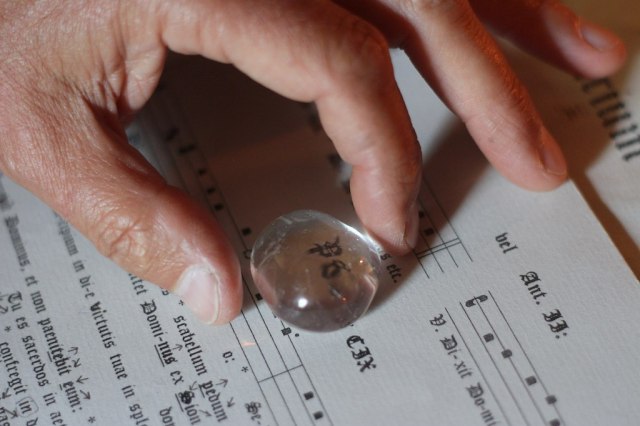
Reading stone. Image credit: Ziko van Dijk via Wikipedia.
A lot happened between 1000AD and 1931 and the details are far too extensive to mention here. Go to the Science Hub web page to learn more.
The two-hour train trip passed quickly as we were busy talking travel, BASE-jumping and electron microscopes with Karel.
The Bratislava railway station was messy and it didn’t have the grandeur of other stations we have had the privilege of visiting. Our favourite station is Valencia in Spain; it is highly decorated and perfectly maintained. Go to archives November 2015 for a look.
The first thing to do after arriving at Bratislava station was to make our way to our pre-booked accommodation. The apartment was a relatively flash affair and we enjoyed our stay; it’s necessary at times to go into accommodation where we can do the washing.
Out and about in Bratislava, the capital of Slovakia.
We had two days to explore the city. From what I have read Bratislava is a ‘switched on’ city and I have to admit in many ways it was; umbrellas overhead, bronze statues emerging from the footpath, beautiful artistic window shutters, and ornate bicycle stands.
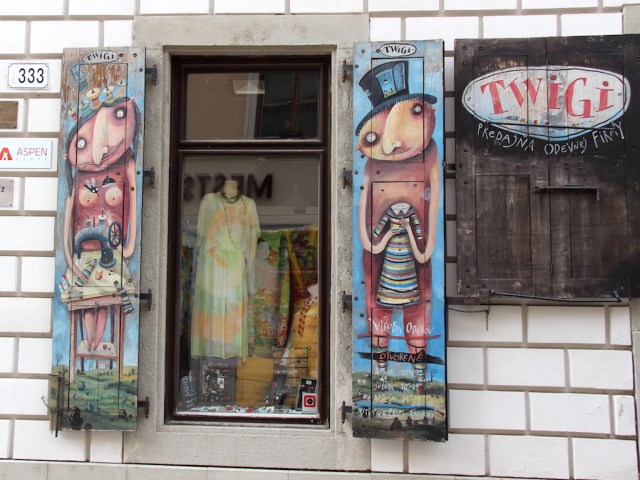
Artistic shop-front shutters.
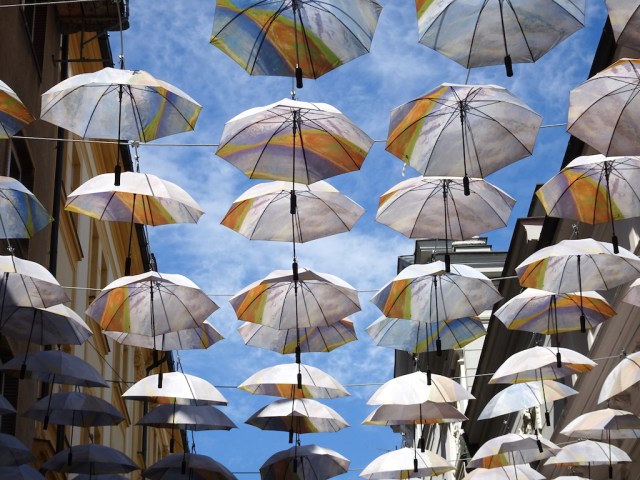
Umbrellas overhead.
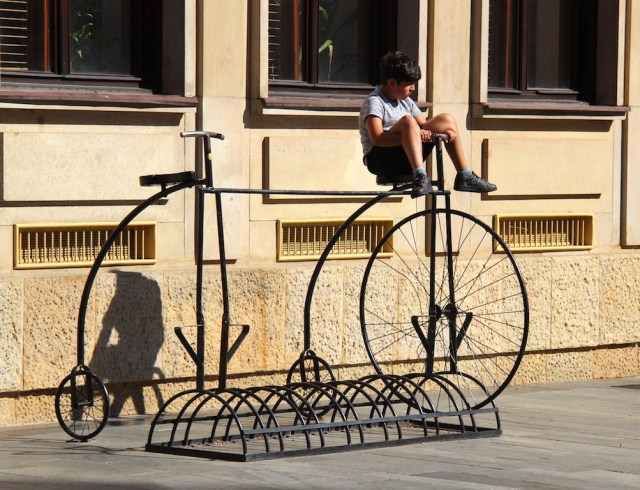
An ornate bicycle rack in Bratislava.
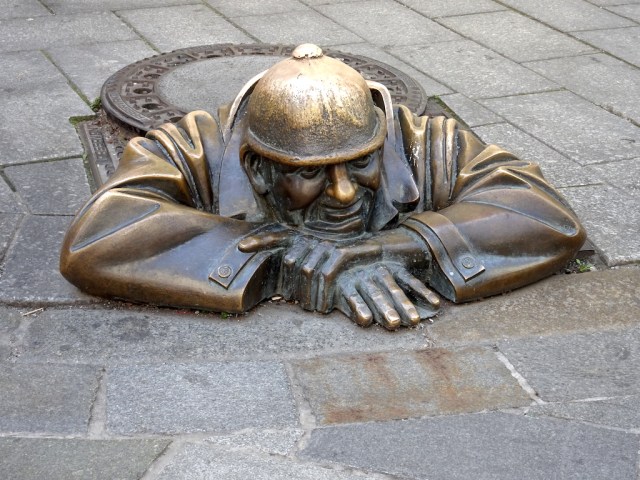
Cumbil, the Man at Work, a bronze statue emerging from the footpath. Would this be accepted in more developed countries where pedestrians might trip over it? Would it be considered a safety issue?
The Cumbil Man’s head was polished as a result of a million tourist rubbings over the years. There are hundreds of bronze statues around the world that are rubbed by tourists or kissed by pilgrims or believers and I wonder if the statues are getting the affection of the past following the Covid pandemic. (Avid readers of this blog know that I am writing it well after the Covid pandemic hit the world in 2020).
One of the main features of Bratislava is the castle perched high above the capital and overlooking the River Danube. The castle was built in the 9th century and it has seen eleven kings and eight queens crowned within its walls. Bev and I rode up to the perfect castle and didn’t find it all that interesting because at bike level all one sees is bland walls.
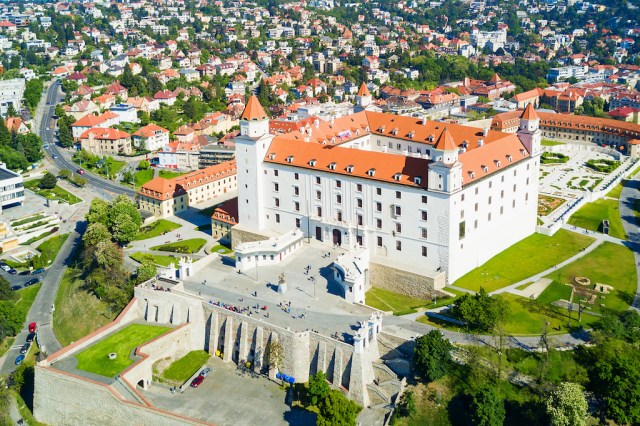
Bratislava Castle. A ground-level photograph of the castle does not do the majestic building justice so I have borrowed a bird’s eye image from Slovakia.com
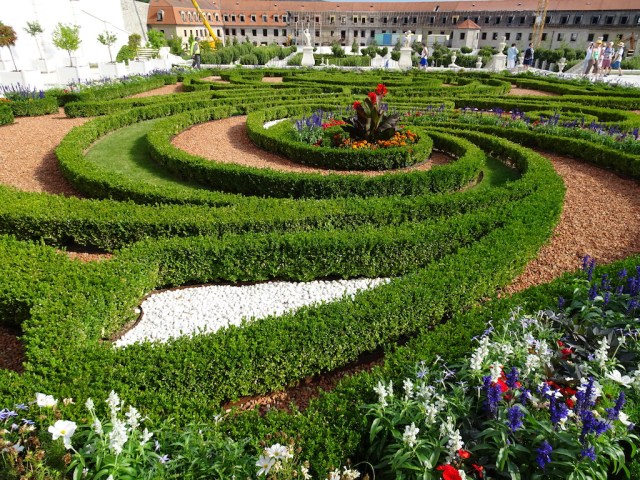
A spiral garden in the castle grounds.
The castle stands near to a natural ford across the River Danube and the ford could well be the reason Bratislava and the castle stand where they do today. In ancient times traders sought these natural fords as a place to cross rivers where waters were shallow.
First traces of settlement on the hill where the castle stands go back to the Stone and Bronze Ages. Although it doesn’t look like a castle as we know them it was important to Hungarians as it was one of the few castles built in the Kingdom of Hungary.
On the way down from the castle we met an interesting young man from Ukraine and the reason I approached him was because I was intrigued by his appearance. Stephan was his name and he was not dressed in designer gear as young travellers do these days but he looked more hippyish in a 2019 sort of way. He also toted a drum and strapped to the outside of his backpack, a bedroll. I thought, here’s an interesting lad, he is probably sleeping rough at night and hitchhiking.
Stephan was from Kyiv (the capital of Ukraine) and over coffee he told us that in summer he usually picked and packed blueberries on his father’s farm but there was no crop due to the lack of rain. He was studying computer programming at university and to fill in his holiday time he decided to walk to Italy. My assumptions that he was sleeping rough and hitchhiking were correct.
The map Stephan was using was an old Russian publication dated 1975. He had no modern technology, he was relying on his old map and a compass to find his way, a man after my own heart.
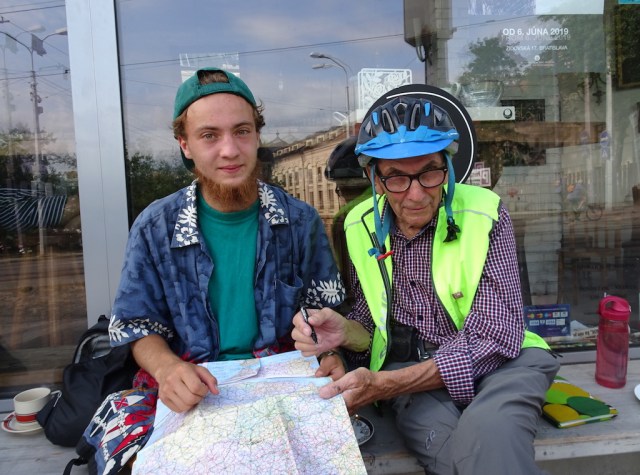
Giving Stephan the benefit of my knowledge as to the best way to walk to Italy.
As we parted company, he gave me an old Soviet badge with an image of Lenin embossed on it and around the edge it said ‘Learn, Learn, Learn’ which was one of Lenin’s common utterances. Unfortunately, I lost the badge in our travels. I’m not sure if Stephan was pro or anti-Russian and I guess I will never know.
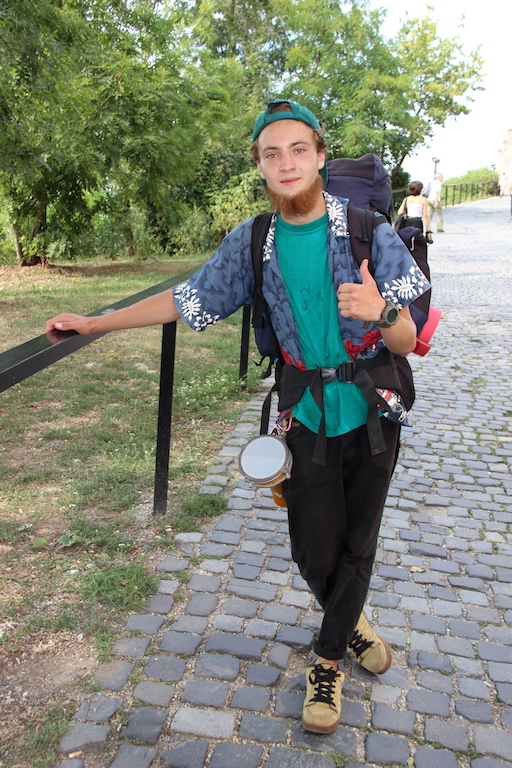
Eye-catching Stephan from Ukraine.
In 2022 Russia invaded Ukraine and I wonder what happened to Stephan. Is he still alive and does his father’s blueberry farm still exist or was it crushed during the Russian onslaught? It is so frustrating not knowing.
Two days of nothing other than eating, taking in the sights and sitting watching the world go by was relaxing and entertaining. Bratislava was a delight as far as food went, there were a number of shops, stores and restaurants devoted to selling vegetarian, vegan, and biodynamic foods. There were also many quirky old buildings and when I stood in front of one I wondered, wondered and wondered.
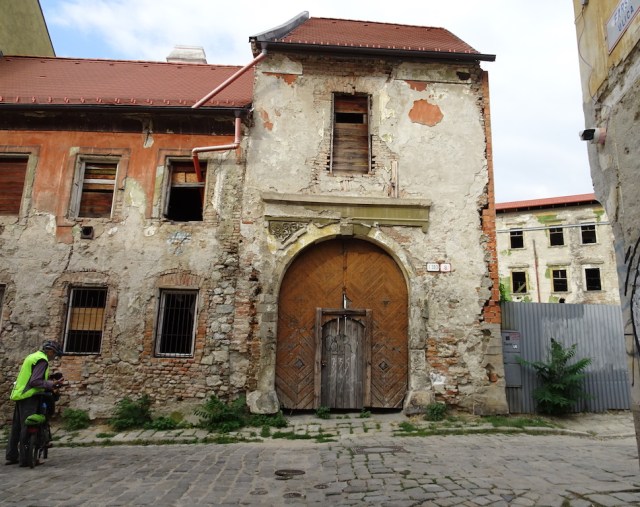
An old forlorn dwelling with stables. Note the PVC drainage pipe disappearing into the upper floor window.
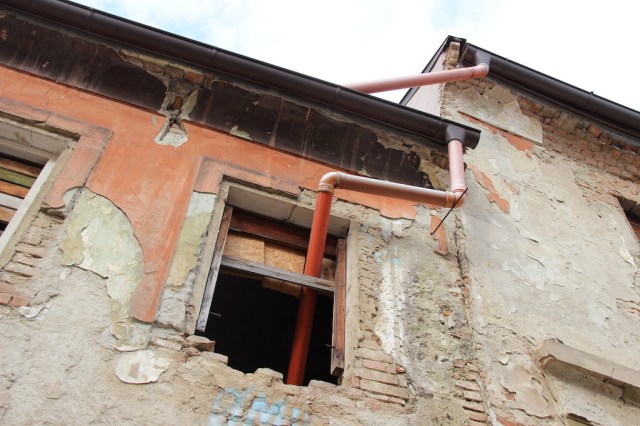
Quick fix plumbing.

A crusty herringbone stable door. Imagine what it would have looked like when it was new.
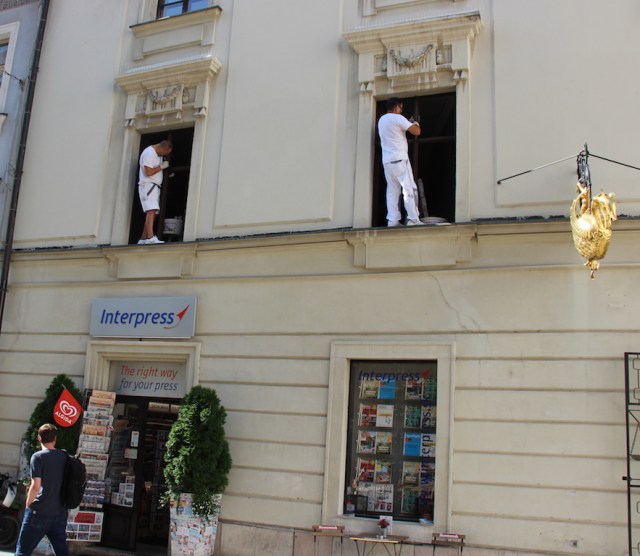
Window painters on high, trusting to luck. These painters had no safety harnesses or any aids to stop them from falling.
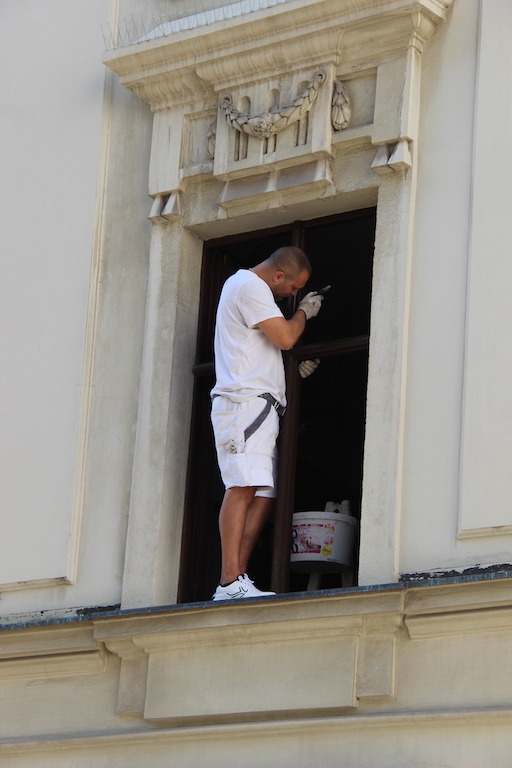
Finely detailed painting on high.
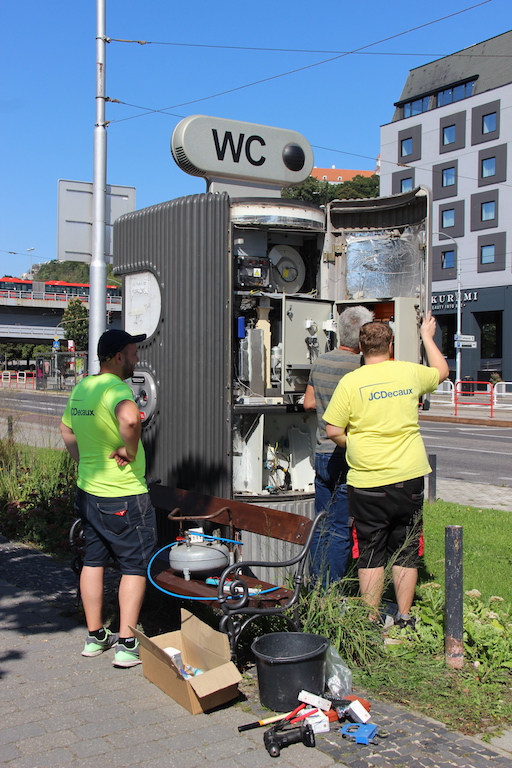
Servicing a high-tech ‘dunny’. Loos such as this one have complex inner workings.
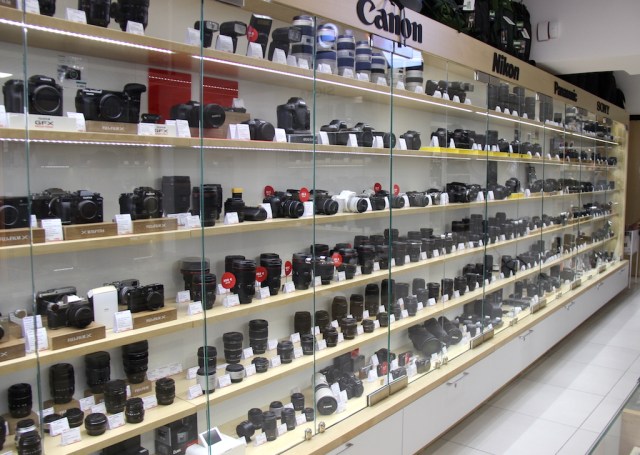
Paradise as far as I am concerned, a shop selling used camera gear.
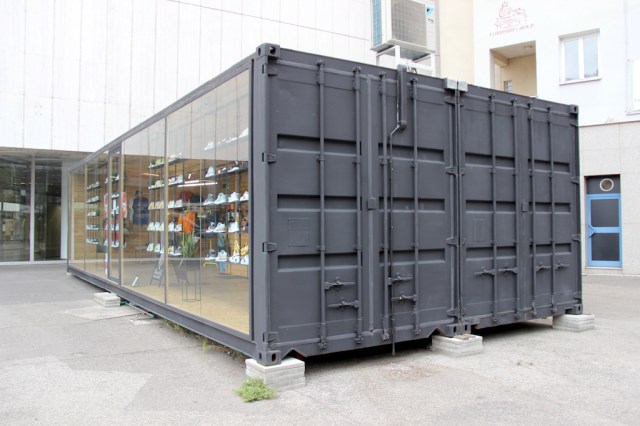
An innovative use for containers incorporating a sports shoe store.
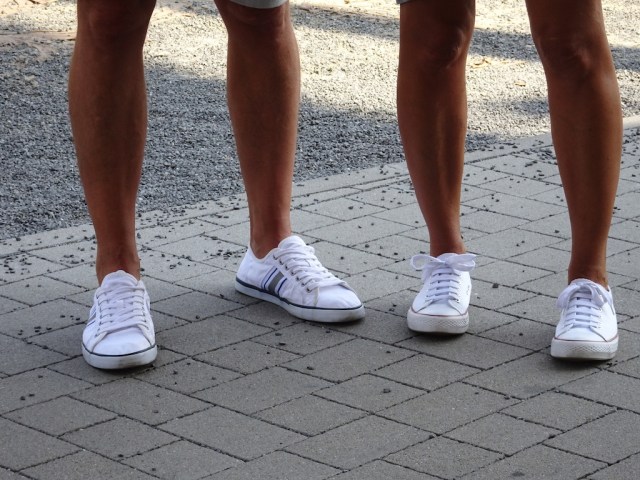
Perfect legs and shoes.
The legs above are the legs of two tourists who stood listening to my conversation with Stephan, the Ukrainian backpacker.
We delighted in the couple of days off in Bratislava to recuperate and rest the posterior, something bikepackers have to do occasionally.
This is the first time I have used bikepacking to describe our activities, I have resisted using the term thinking it was a modern phrase, however after researching the word I realized it has been used for more than a hundred years.
Early settlers in Australia in the 1890s used bicycles with bags strapped to their handlebars and frame to carry their belongings into the Australian outback. The original caption relative to the following image said ‘a dandy bikepacker’.
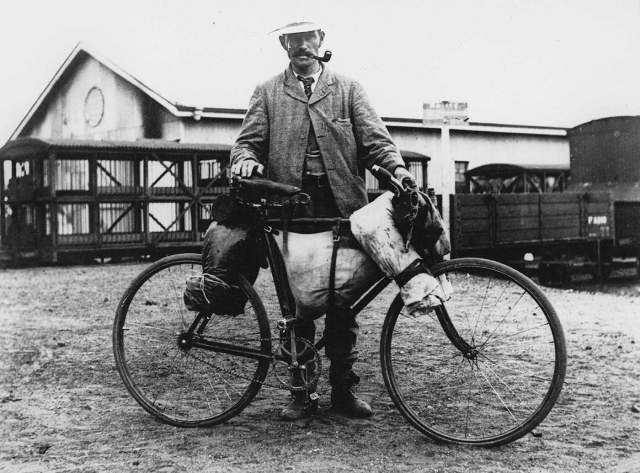
A well-dressed bikepacker of the 1900s. Image credit: National Museum of Australia.
Bikepackers today do it easy, nowhere as hard as their predecessors. Today just about every conceivable lightweight item is available to them along with digital navigation tools, lightweight cookers and even collapsible bowls and mugs and foldup chairs.
Modern-day bikepackers are a particular breed. They are usually self-sufficient minimalists who seek out less travelled places; they are not cruise ship, motorhome or organized tour people, they enjoy the freedom of the ride even though at times it rains, blows a gale, snows or the road freezes over.
If you want to read more about early bikepackers in Australia get a copy of ‘Tour de OZ’. The book details the adventures of Arthur Richardson who left Coolgardie in 1896 carrying a small kit, waterbag and a pistol. After thirty-one days he achieved his aim to be the first to ride across the Nullabor. Three years later he rode 18,507km around Australia after surviving hunger, exhaustion, crocodiles and spears from Aboriginal warriors.
That’s the end of this post. if you wish please leave a comment. The next post returns us to Vienna.

 Fred and Bev's Odyssey
I will be there in a few weeks! Looking forward to seeing it!