VIENNA TO PASSAU
August 2019
Vienna-Krems-Melk
Day 1
Our intention of getting away early and riding to Krems was not as straightforward as we had hoped as Marie and JB took us to breakfast at their favourite restaurant for a smorgasbord of Austrian delights. It seems having brunch on Saturday is a ritual and in retrospect, it was something not to be missed. It was near midday when we said our farewells so we decided to take the train to Krems to make up lost time.
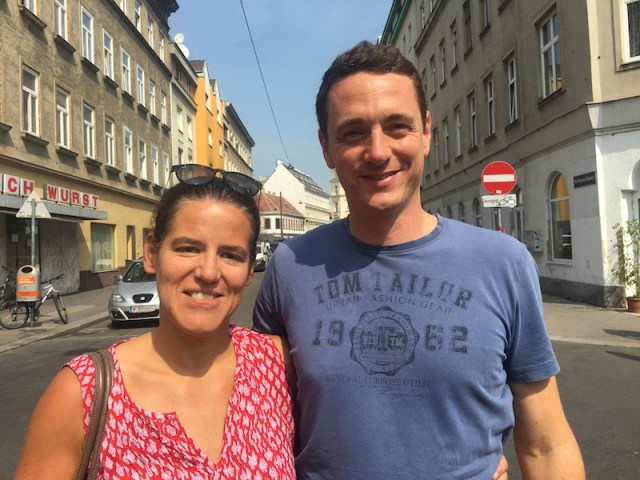
Our Couchsurfing hosts Marie and JB in Vienna.
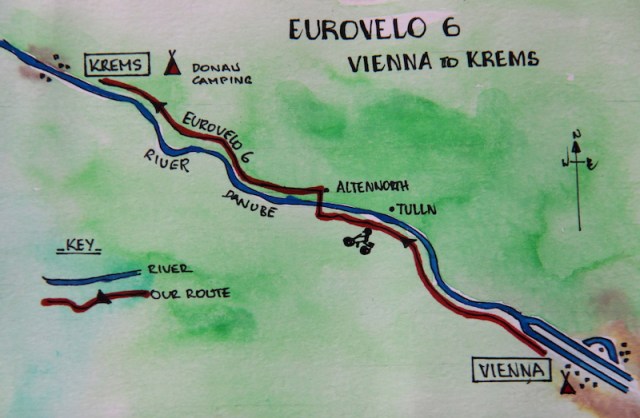 At Krems we found ourselves near a military display and the volunteer soldiers were very helpful in giving us directions to the camping area that catered for cyclists.
There were around a dozen tents in an area of about 30m x 30m, a bit squashed but at least we were with like-minded people. One of the cyclists was a young man who knew our friend Rolf in Zurich. Rolf and his wife Erika were riding their bikes around the world some 30 years ago and passed through our village. They stayed with us for a week and over the years we have kept in contact and use their place as a base when in Europe. Urs (the young man who knew Rolf) was from Zurich and riding to Bratislava. When we asked about his employment he told us he was between jobs and the new job he was going to involved running a farm on which mentally ill people lived and farmed to a point of self-sufficiency. His previous job was working with prisoner rehabilitation and that’s how he knew Rolf, they were in the same business. When one thinks about the millions of people in Europe and the places where we could meet someone with a connection to Rolf, the chances are beyond belief.
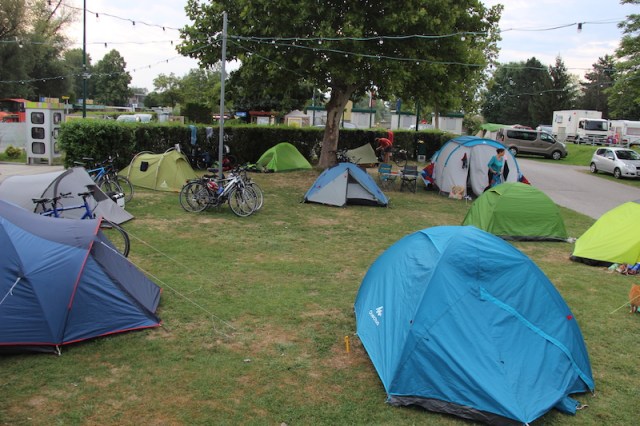
Our camp at Donau Camping in Krems. Our tent is the far green one by the hedge.

The marquee in the background was erected especially for bikepackers such as us.
In Krems we passed a significant milestone; according to my odometer we had completed 3000 kilometres of our Observations from the Saddle of a Bike Odyssey 2019, no mean feat for a couple of old donkeys who some might consider past their prime.
Krems to Melk
Day 2
We were up early for a shower before everyone else went for their ablutions. Breakfast was the usual oats and bread rolls with banana and apple. Some of our food we shared with Urs, we gave him a banana and apple roll and he said it was the first time he had had such a combination. Can you imagine never having had a banana sandwich!
Again, it was a somewhat slow packup due to talks with fellow cyclists. Some were out on a weekend jaunt, others on longer trips along the Eurovelo 6 towards Romania and the Black Sea, a few thousand kilometres to the east.
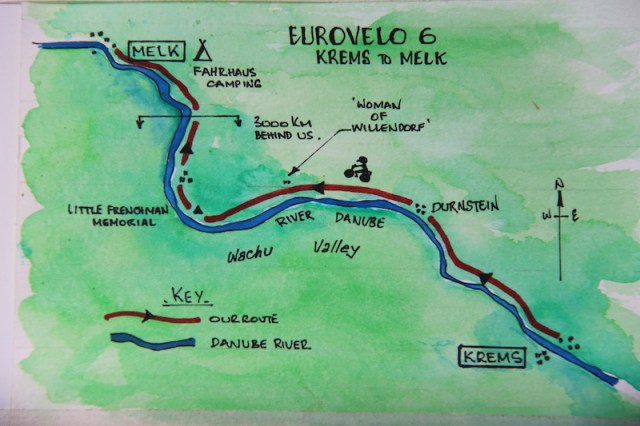 The day’s route followed the Danube which cuts through the Wachau Valley. The valley has a long history of occupation by Romans, Turks and Hungarians, to name a few. It has been inhabited for near 32 000 years. In the medieval period, big changes came to the valley; monasteries were built and the monks established a wine industry which continues today. Over the years many connoisseurs and epicures have visited the valley to buy wine and apricot liqueurs (a speciality of the area).
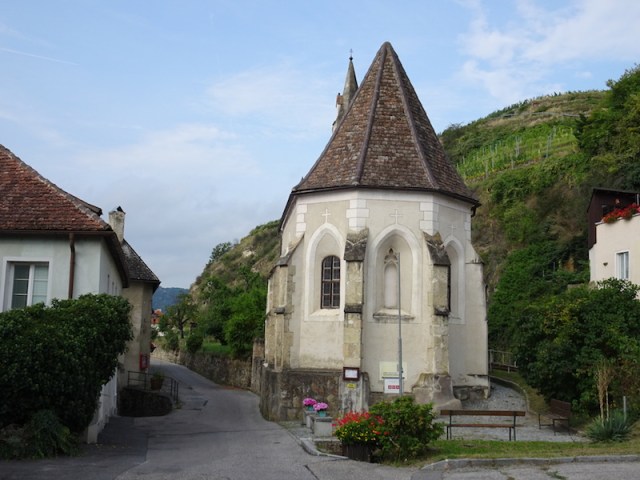
A chapel on the way.
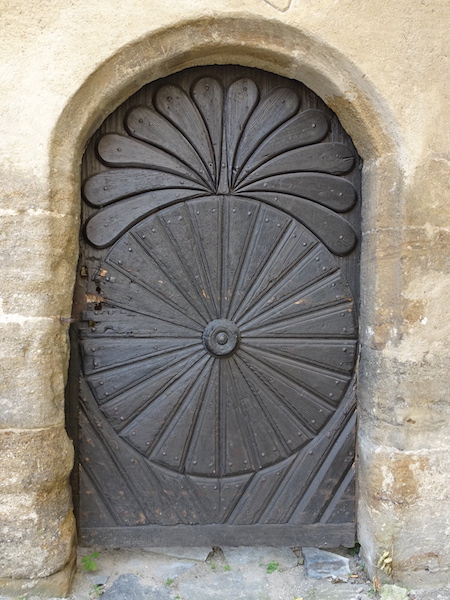
A well-used doorway, the arch jambs have taken a bit of a pounding.
Our first major stop was at Durnstein, an historic village on the banks of the River Danube. Entering the town was like entering a time machine going from the present day to medieval times, however once inside you realise that you are in modern times as hundreds of tourists crammed the narrow cobblestone streets. The day will come when access to Durnstein will be by appointment only.
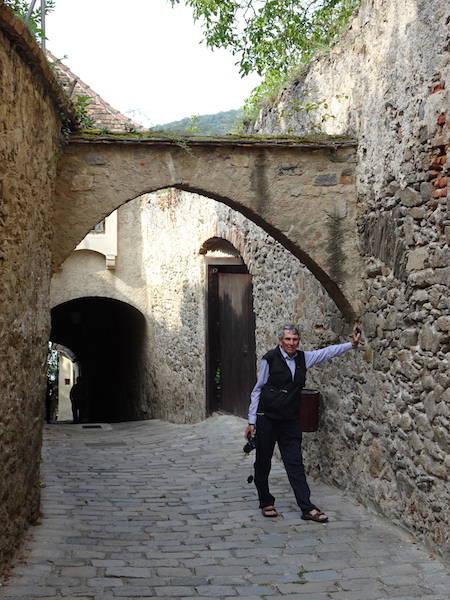
Holding up the wall in Durnstein. The arch above my head is a brace to stop the walls of the buildings on either side from imploding.
In the town the buildings were colourful and the real eye-openers were the highly decorated blue tower and entrance of the church of Durnstein.
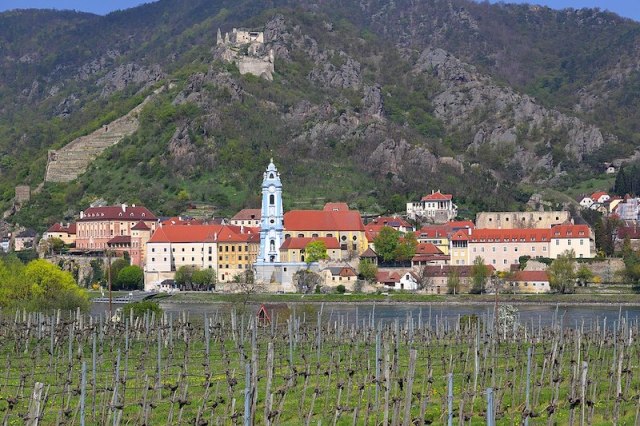
The town of Durnstein from across the river with the dominant blue church tower. Image credit: Copyright Stadler/Bwag via Wikipedia.
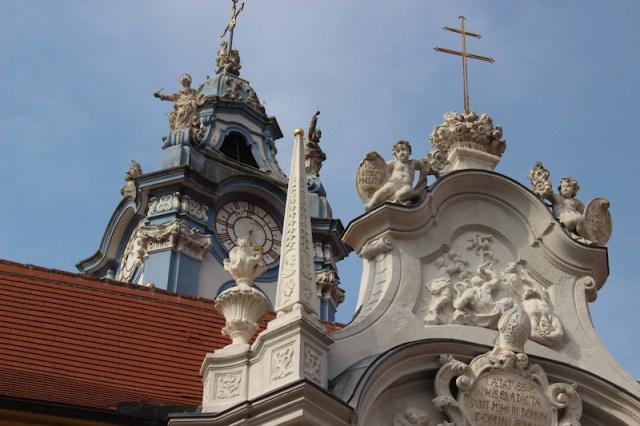
Detail of the Blue Tower.
The tourists in the town were so thick we dismounted and pushed our bikes the length of the main thoroughfare. I noticed a T-Bear replica in a tray outside a shop, and I immediately felt compassion and had to buy him to get him away from the crowded street!
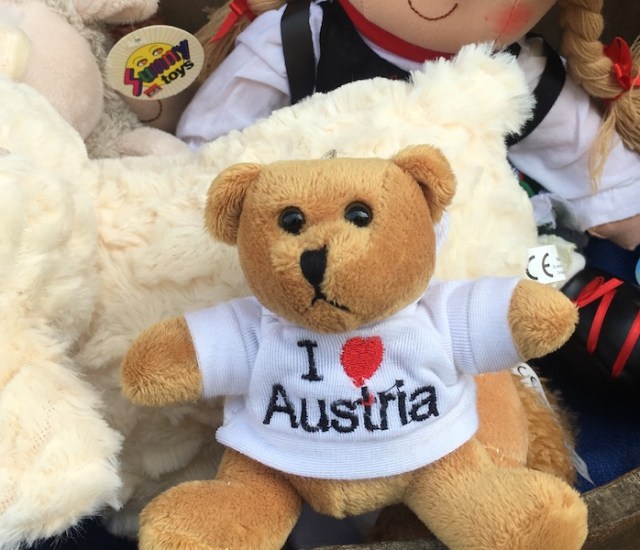
The forlorn ‘I love Austria’ bear. Now known as ‘A-Bear’.
Avid readers of this blog will know about our travelling iconic T-Bear, who jumped off my handlebars in Dresden and our vain efforts to find him. They will also know about the replacement, B-Bear, which we lost on a flight from Australia to Zurich at the beginning of this trip. We have spent months travelling without a mascot and it was time for a replacement. A-Bear was the one.
Not far from Durnstein were the Little Frenchman Memorial and the ruins of Durnstein Castle.
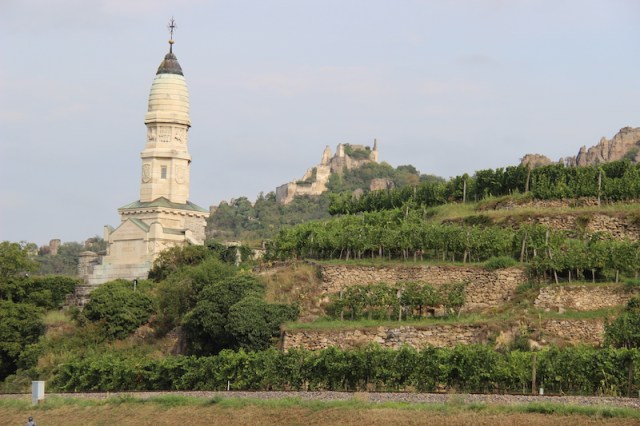
The Little Frenchman Memorial (foreground) and Durnstein Castle on the horizon.
Durnstein Castle is a medieval rock castle erected in the 12th century, now only ruins remain. This is where King Richard I of England was temporarily imprisoned after being captured near Vienna. In 1663 Conrad Balthasar purchased the castle and is still owned by his heirs.
The castle has been laid to waste numerous times during its life. Warships were able to sail up the Danube and therefore armies from distant lands could plunder the castles and the valley’s population.
The ‘Little Frenchman Memorial’ commemorates a battle in 1805 between the combined Russian and Austrian troops and a French division. At the time we did not understand the significance of the memorial, however since returning home and researching the event it makes me feel we should go back and get to know more. It was hard to believe that where we were cycling hundreds of troops had been slaughtered. The grape vines continue to grow as if nothing had ever happened.
Between Durnstein and Melk we passed through the village of Willendorf. This is where a 30 thousand-year-old figurine was unearthed in 1908 by a workman working on a Palaeolithic archaeological site. The figurine is made from oolitic limestone and it is generally agreed that the stone from which it is carved came from over the Alps in Italy. There is an alternative theory that the limestone came from Ukraine. Regardless, once you see the figurine you never forget it.
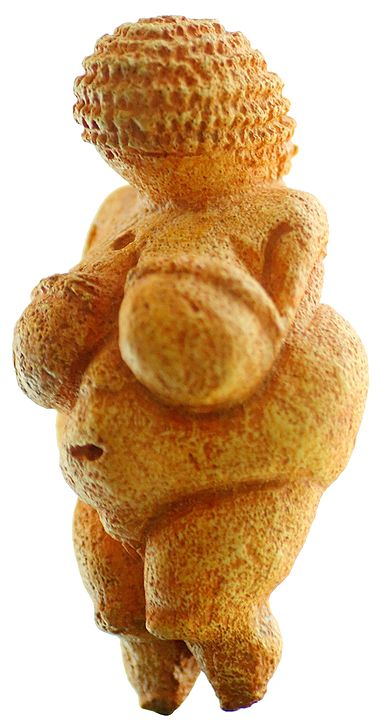
The 30-thousand-year-old figurine found near Willendorf. User: Matthias Kabel – Own work
There is much controversy relating to the name of the statuette, some call it the Fertility Goddess because of its exaggerated sexual features but the general name is Venus of Willendorf. The figurine stands at around 110mm high and has no feet. According to the experts it probably never had feet. It is housed in the Natural History Museum in Vienna.
The bike path followed the river with established vineyards and orchards on either side of the narrow Wachau valley. The valley is listed as a UNESCO World Heritage site.
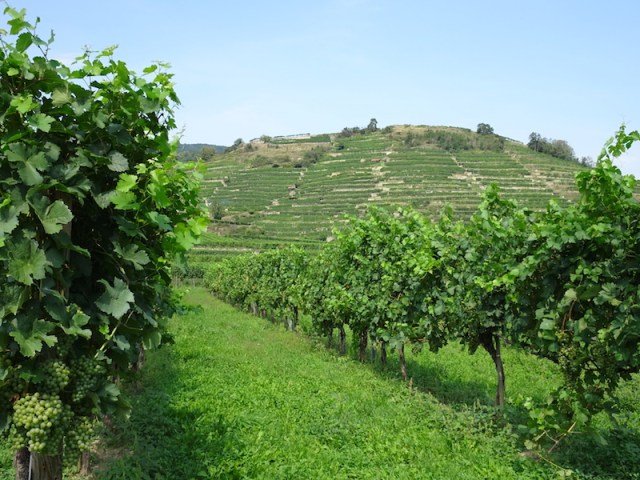
Vines reaching maturity in the Wachau Valley.
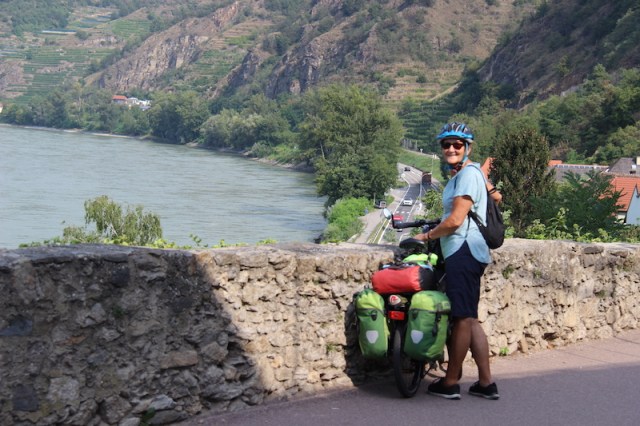
View of Wachau Valley from the bike path.
Every square centimetre of country is laid to grape vines and the following photograph shows a unique way of utilizing land available. The grape trellis is exactly on the property boundary.
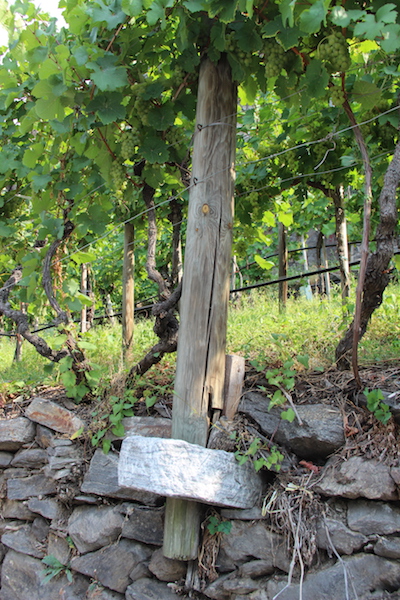
An abutment projecting in which the trellis post was anchored.
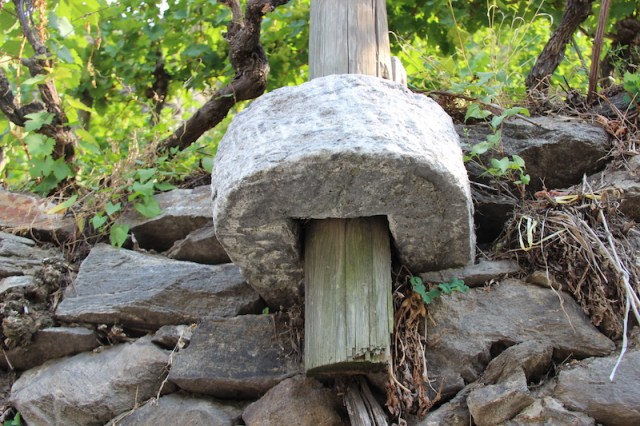
The underside of the abutment. Imagine the work of chipping a square hole in the stone.
As we rode towards Melk we passed another historic castle ruin, Aggstein Castle, dating back to the 12th century. It was easy to see why the Wachau Valley was on the list of World Heritage sites.
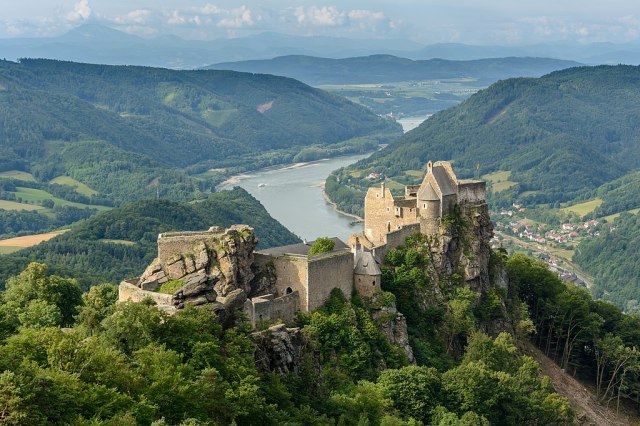
The Wachau Valley from on high. This is the Aggstein Castle built in the early 12th century. Image credit: Uoai 1 via Wikipedia.
At day’s end we found ourselves in the Melk camping area attached to the Fahrhaus Hotel on the banks of the Danube. There was no camp kitchen or anywhere to get out of the rain so we had to revert to taking shelter and eating at the hotel. It was a relief not to have to cook in the open, without a table or seats.
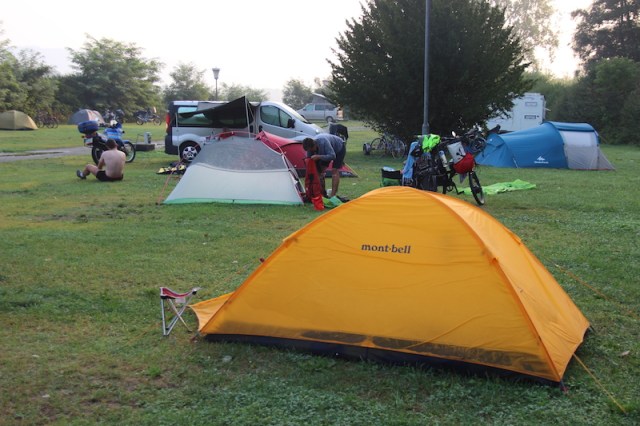
The ‘no camp kitchen, shelter or seats’ camping area attached to the Fahrhaus Hotel. Bev is erecting our tent.
The owner of the yellow Mont-bell tent in the foreground was wise as he/she was carrying a three-legged stool. Many bike tourers carry a small stool or chair and Bev and I have decided that in future we will do the same as one gets tired of grovelling on the ground, especially if it is wet.
It was a wet night outside our tent and the rain on the outside overcame any insomniac tendencies.
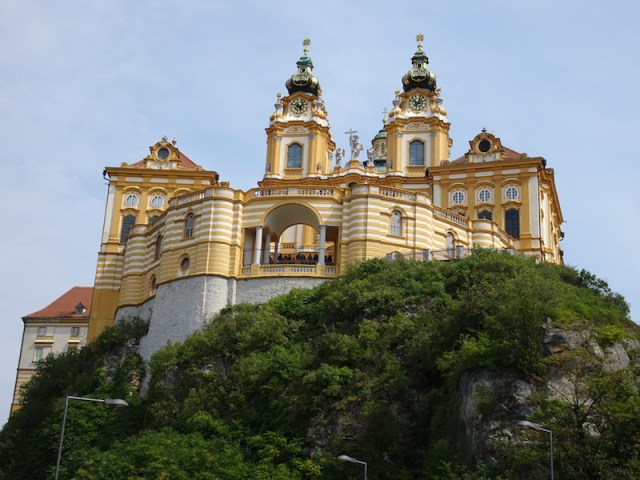
A little house on the hill at Melk. Melk Abbey, the home of Benedictine Monks since 1089.
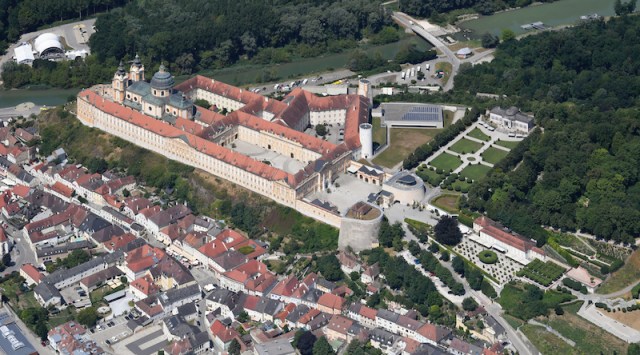
Aerial image of Melk Abbey (view from the southeast)
From Melk we caught a train to Linz further west in Austria. Bev’s brother was visiting old friends near Lake Attersee on a farm at Steinbach and we joined him for a visit.
__________________________________________________
STOPOVER in the UPPER AUSTRIAN LAKES DISTRICT (Salzkammergut)
AUGUST 2019
Melk to Steinbach via Linz
Day 1
Our journey from Melk to Steinbach on Lake Attersee involved three train rides, a ferry ride and a cycle to the farm where we stayed for a few days. Our reason for this visit was to connect with Roger and Mimi, Bev’s brother and his partner, who were visiting from Australia.
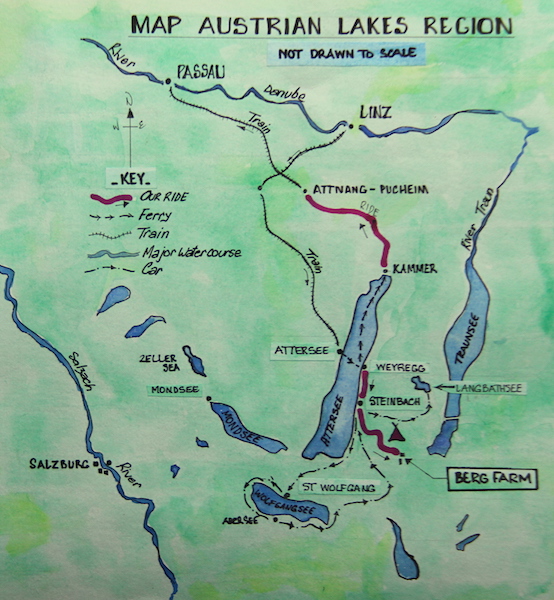
Upper Austria Lakes District
The train trip from Linz involved a change at Vocklamarkt to a narrow-gauge toy-like train (in Austria, a Hobby Train). It was a pleasant experience as it stopped at several tiny stations on its route to Attersee. The small train did not clatter, bump or sway, it ran as if it were on silk rails.
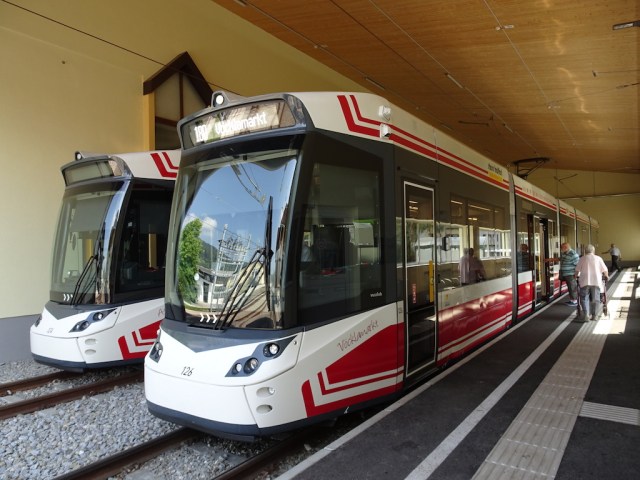
The hobby train from Vocklamarkt to Attersee.
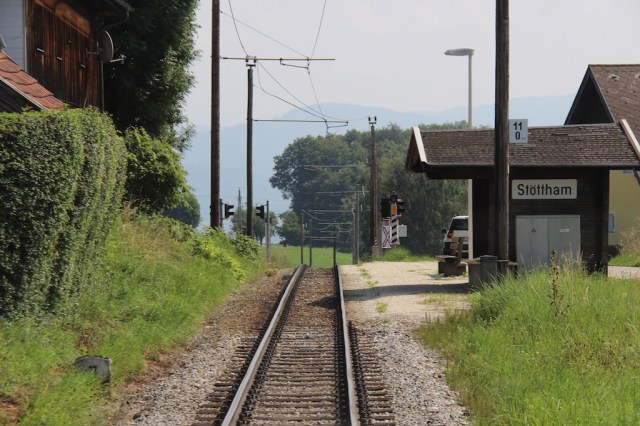
The narrow-gauge Hobby Train line on the way to Attersee.
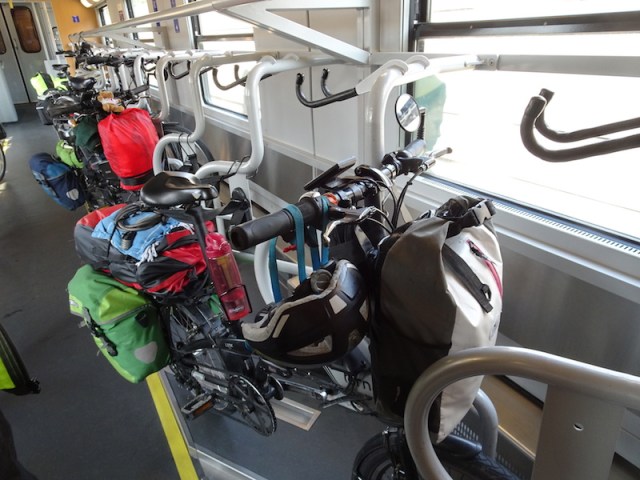
A shining example of how railway authorities should cater for bikepackers. It is possible to hang the bikes vertically but with panniers the bike can remain horizontal.
At Attersee we replenished our water supplies and took a pizza at the local café. The day was ours as we were not due at Berg Farm until the afternoon. From Attersee we caught the ferry across the lake to Weyregg from where we rode twelve kilometres around the lake edge to Steinbach.
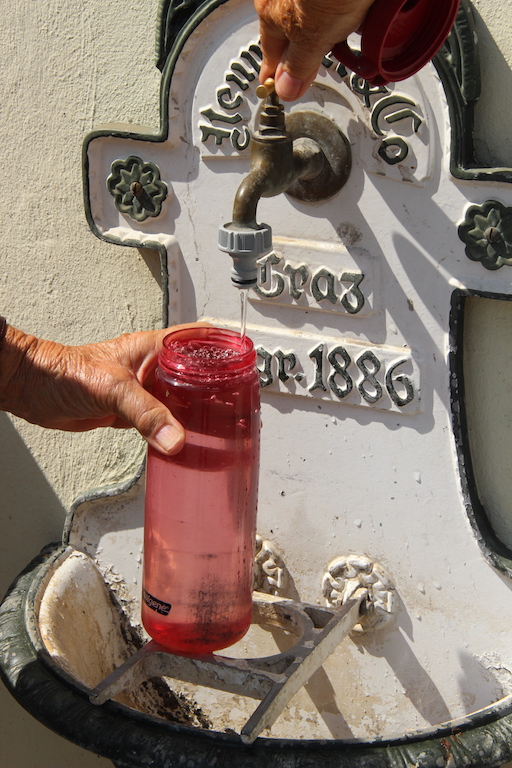
Taking water at the Attersee station. Many things are old and ornate in Europe.
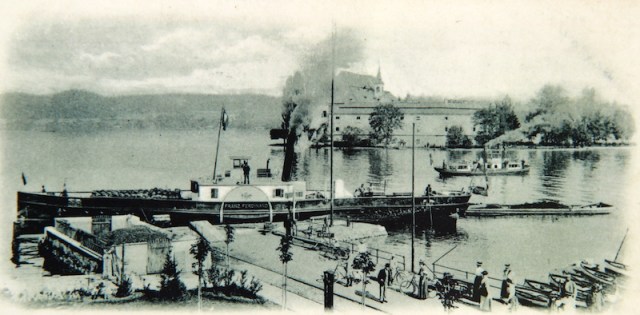
The lake ferry back in the 1900s.
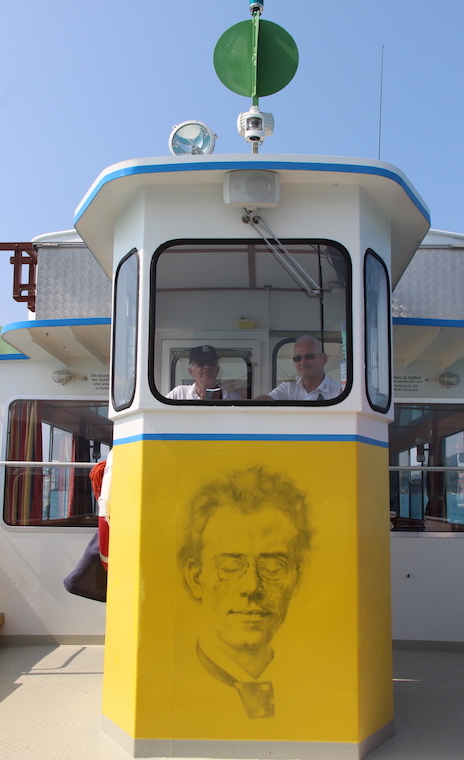
The bridge of the modern-day ferry. The portrait is of interest.
Bev’s brother lived in Germany for many years and often visitedmeasure Berg Farm for holidays. Roger now lives in Australia but when he visits Europe, he continues the tradition of visiting old friends at the farm.
It was not easy going riding from Steinbach to Berg Farm. The 15% grade pull-up to the farm was probably the longest haul we have done nonstop. The effort was worthwhile as the farm, located at the base of a limestone mountain was a perfect setting with awesome views towards Lake Attersee.
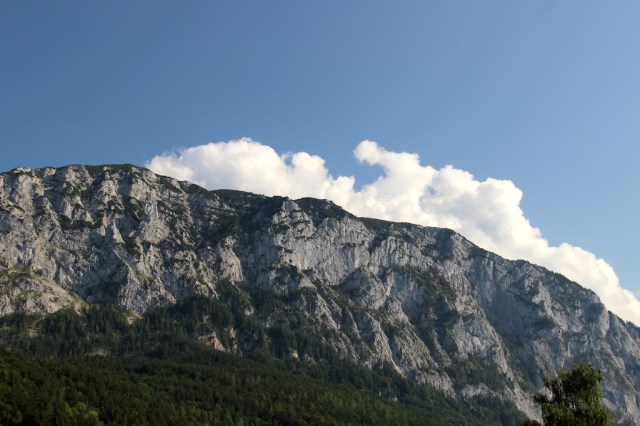
The limestone monolith viewed from the verandah of the Berg Farm house.
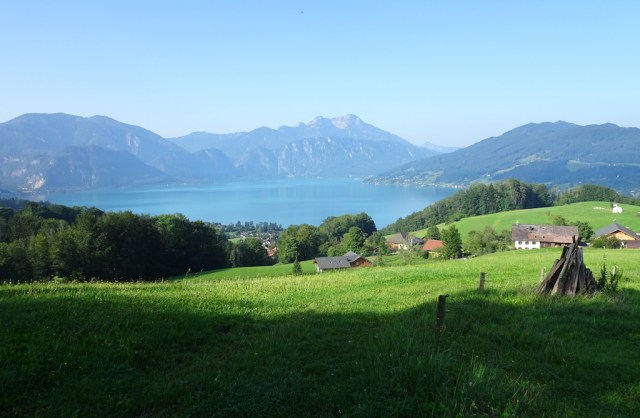
An Austrian lake landscape.
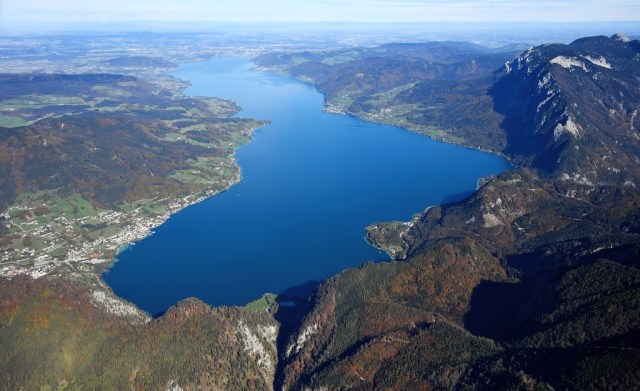
Aerial image of the Attersee (view from the southwest) Attersee (lake) Austria. Image credit: Carsten Steger via Wikipedia.
The lake is approximately twenty kilometres long, four kilometres wide and eighty-five metres deep. A mass of water this size rarely freezes, the last time it froze completely was in the 1940s when people skated and rode motorcycles across it. Water in a lake of this nature is cold and clear and it is these qualities that attract many water sports enthusiasts. There is no bike path circling the lake completely but there is a bike route for fifty-two kilometres along its eastern shore which Bev and I rode part thereof.
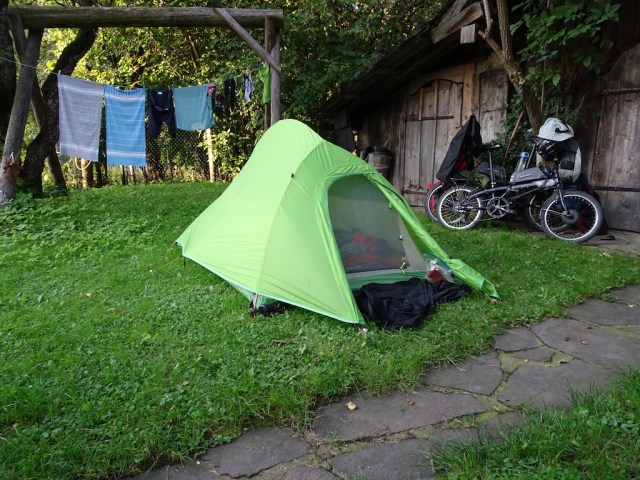
Our on-the-road abode next to the barn and under apple trees on Berg Farm.
Bev and I had our tent pitched next to an old barn and on either side of us were apple trees. During the night apples were dropping due to high winds and a thunderstorm. The thunder echoed off the mountains around us which made the storm sound much more intense than it was. Unfortunately, most of the apples were infected with fruit fly that made them inedible. Fruit fly-infected apples are suitable for the making of apple cider, provided they are not seriously infected.
When lying outside in a tent it is interesting to know how far a storm is away. To estimate the distance all you have to do is measure the time between the flash of lightning and the clap of thunder. Sound travels at approximately 340 metres per second, so multiply the seconds counted between the flash of lightning and the clap by 340. A count of four seconds, which is what it was, put the storm centre at about one and a half kilometres away.
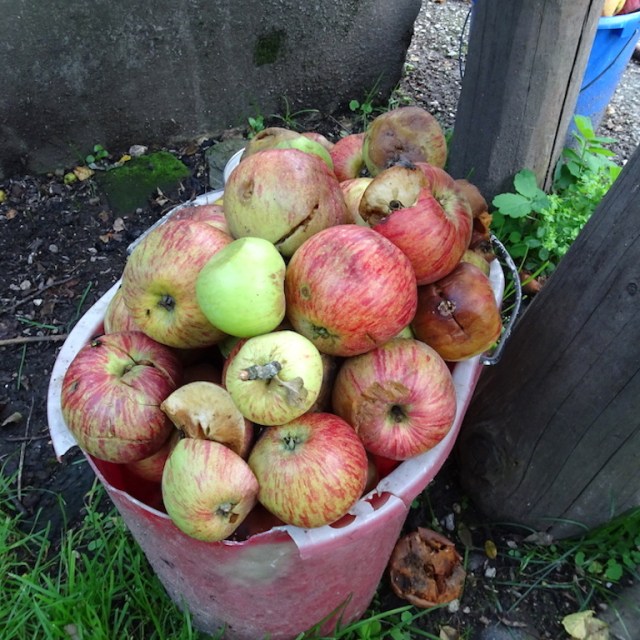
The collected windfalls from around our tent.
The making of apple cider at home in Europe is not uncommon and some people with only one tree in their backyard take their apples to the local distillery to have them pressed.
There are a few things to be said about lightweight tents. They must be green to blend in with the surroundings when stealth camping. They need to be self-supporting and not rely on pegs as if the ground is hard and there are no big rocks about to weigh your tent down you can still erect the tent, also if you need to sleep in a shed with a concrete floor the tent can stand alone. Tents need to be small, as a small space is easy to warm and the bigger the tent the heavier your total bike weight is. The tent floor needs to be exactly the same size as two camp mattresses (that’s if there are two of you). If the mattresses are not a tight fit they could drift apart and create an air gap.
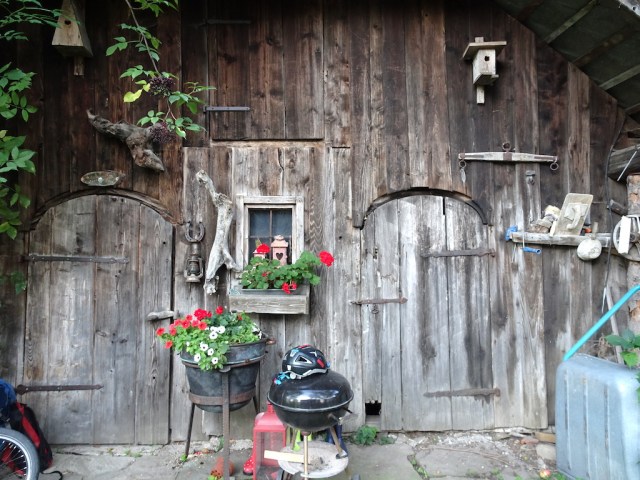
The view from our tent door at Berg Farm.
Several things in the above photograph fascinate me: a horseshoe (pointing up so luck doesn’t run out), a kerosene lamp, a bird nesting box, a chunk of driftwood, a single Wippletree, a builder’s wooden float, a paint roller and a cat hole at the bottom of the door. Sue, an avid reader of this blog, would love to have a few of these bits and pieces to decorate her home with. Good on you, Sue!
Day 3
On this day we did the family thing and drove to Wolfgangsee (a small nearby lake). It was an unusual experience getting into a vehicle, as over the past weeks we have not travelled in a car. Up to this point during this odyssey we had been riding our bikes for around 130 days.
One place of note we visited was St Wolfgang where the White Horse Inn of operetta fame is located.
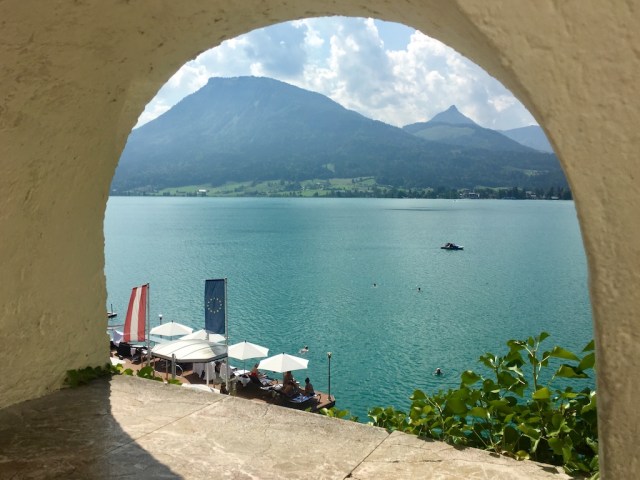
St Wolfgangsee
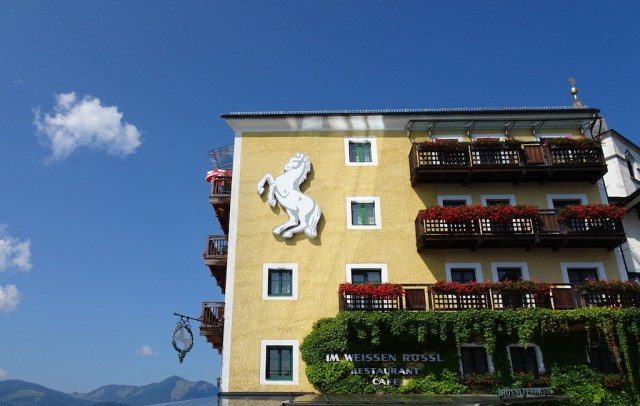
The White Horse Inn.
The inn is nothing to look at unless it had a better side which we didn’t see. The front when viewed from the lake is probably more attractive, I was expecting a more classic Austrian building. Regardless, its fame makes up for its lack of architectural splendour.
The story about how the Whitehorse Inn was chosen for plays, musical comedies, operettas and films is amusing but complicated. I suggest the reader goes to the web to read more, but in brief, the plot revolves around Leopold, a waiter who worked at the inn, and the widowed owner of the inn, Josepha. She didn’t want any involvement with Leopold and while she appreciated his aptness as a waiter, she had her sights set on a lawyer, a frequent visitor to the inn whose arrival she longingly waited for. Josepha thinks men are ‘gold diggers’ unless, of course, they are richer than she. With a broken heart Leopold decided to join the Foreign Legion and travel far away.
The song ‘Goodbye’ sung by Josef Locke features in one scene of the operetta and it is worth going to the Internet and indulging yourself. I have had a long association with the song as at a friend’s wedding many years ago an elderly relative of the groom sang ’Goodbye’ as the bride and groom left the reception. The song stayed with me for all these years and I’m pleased the visit to the White Horse Inn rekindled my love of the story and music.
Day 4
On Day 4 we travelled by car with Roger and Mimi to Langbathsee. This lake is one of the many small lakes in the Austrian Alpine region and is classified as a nature reserve. The lake has crystal clear water and natural sandy beaches. The average water temperature is around 23 degrees.
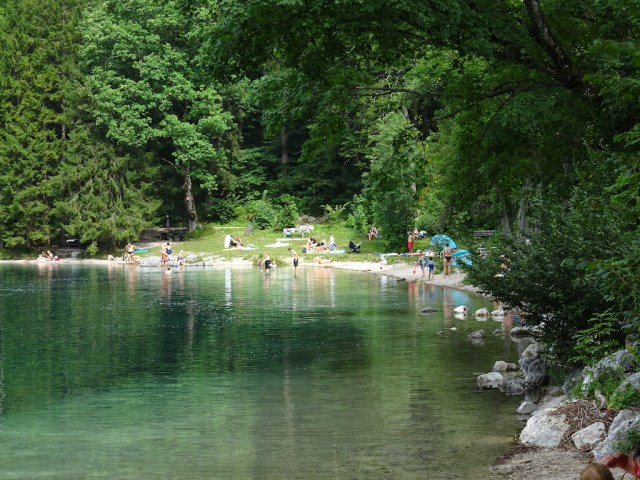
Idyllic Langbathsee with crystal clear water and sandy beaches.
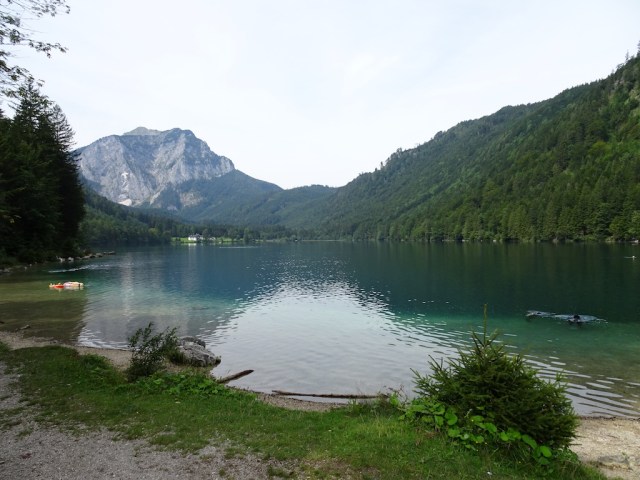
Langbathsee sits at the top of a narrow valley.
Here are a few favourite images before we departed from Berg Farm.
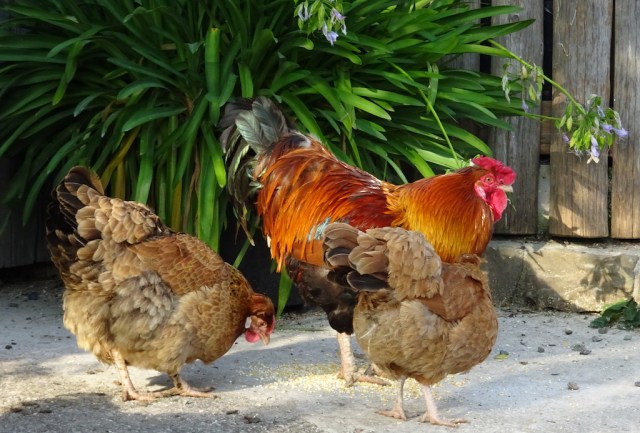
Chickens and rooster on the prowl.
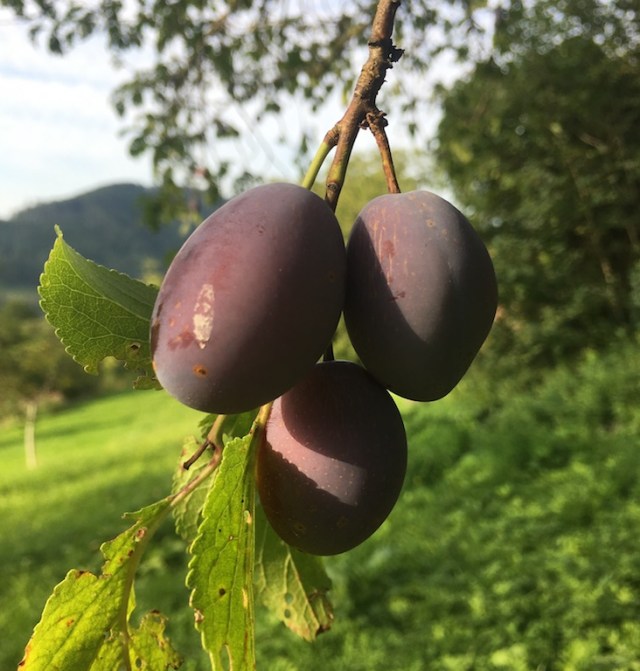
Three symmetrical plums.
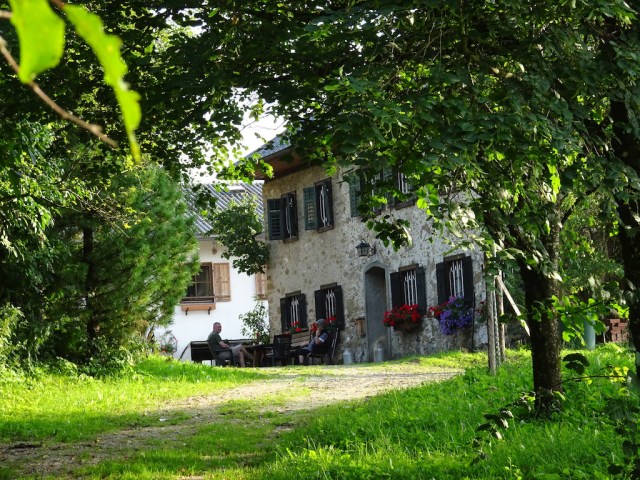
The Berg farmhouse.
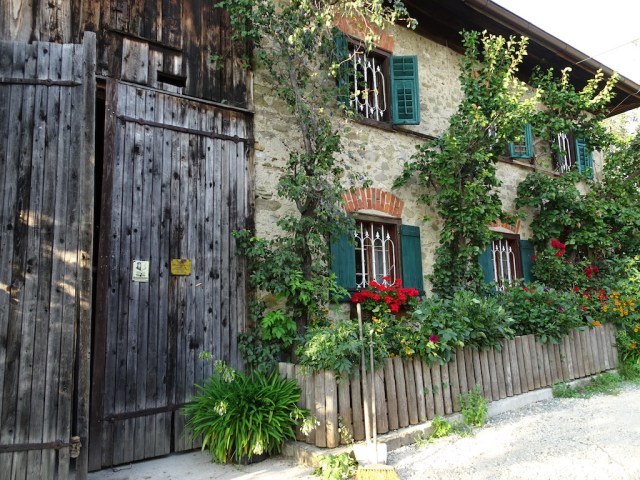
A typical Austrian farmhouse.
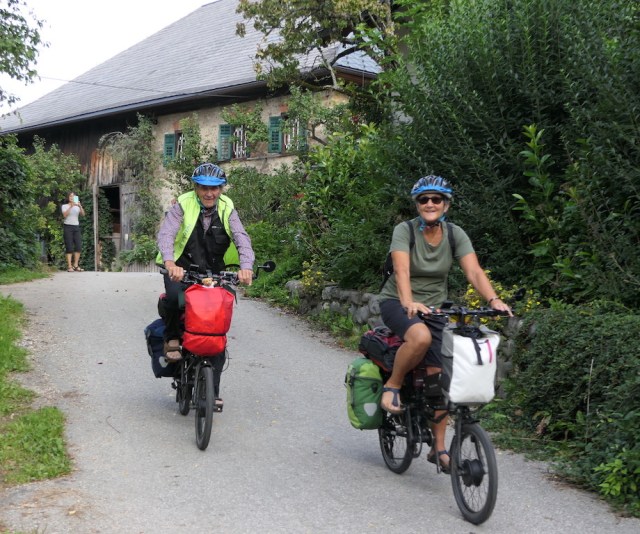
Heading for the next destination.
Day 5
On the move again: Berg Farm to PASSAU.
After farewells we rode the twelve kilometres back to Weyregg where we took morning tea before boarding the ferry to Kammer at the end of the lake. From Kammer we followed a bike path to Attnang-Pucheim where we caught a train to Passau. The bike path we were following ended abruptly in the middle of a ploughed field (we probably took a wrong turn somewhere) so all we could do was push through the field to the station. A one-carriage train arrived with a limit of four bikes, which could have been a problem as a family with five bikes was intent on boarding the same train. It turned out not to be a problem as we all managed to shuffle and squeeze on board.
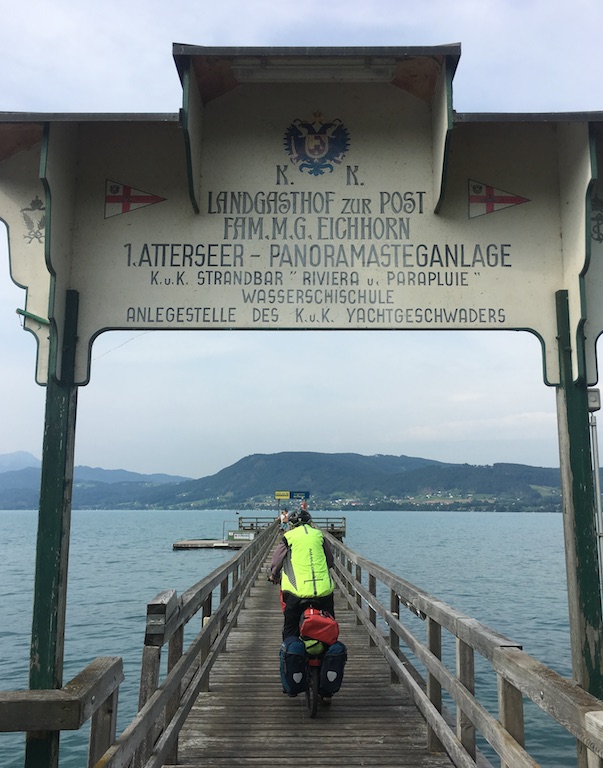
The Weyregg jetty.
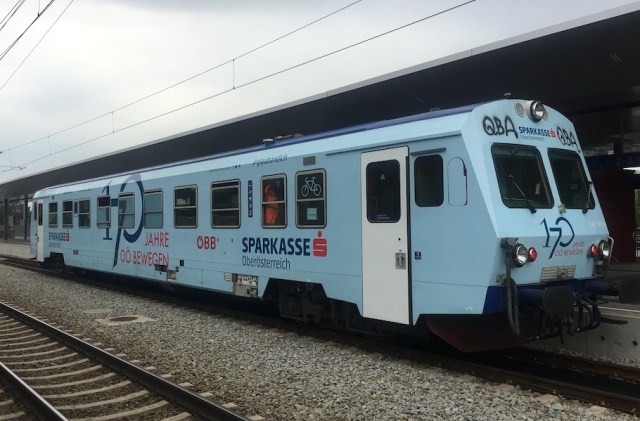
The one-carriage local train.
That’s the end of this post. Bev and I hope you enjoyed reading about our trip to the Austrian lakes. Make a comment if you wish, we would like to hear from you.

 Fred and Bev's Odyssey