OBSERVATIONS from the SADDLE of a BIKE
BRISBANE VALLEY RAIL TRAIL.
JUNE 2023.
 The Brisbane Valley Rail Trail (BVRT) is the longest rail trail in Australia and runs from Yarraman to Wulkuraka, a total distance of 161 kilometres. The railway link was initially used for the transportation of timber products and in later years for passengers.
According to the brochures the Brisbane Valley Rail Trail has had the steel rails and sleepers removed and they have been replaced with compacted granite. Roads and bike paths in Australia are nowhere as predictable as they are in Europe where we had been riding in the years before the pandemic. The changeability of conditions and poorer quality bike paths in Australia generally have made us reconsider the suitability of the twenty-inch wheels of our Tern fold-up bikes for Australian conditions. An upgrade was called for and we are now riding bikes with 26-inch wheels, which ride more smoothly across potholes, washouts and rough surfaces.
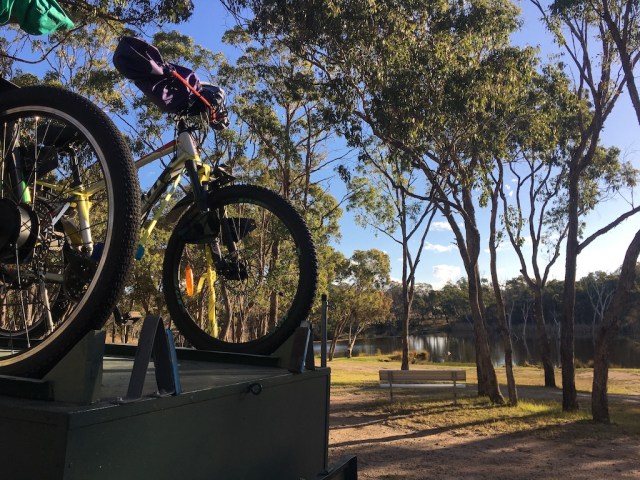
Our bikes travel on the top of a multi-use closed trailer.
Our journey to Queensland to ride the rail trail took us along the New England Highway through what is called the ‘Granite Belt’. For most parts, the highway runs parallel to the now defunct Armidale to Wallangarra railway line. The Great Northern Line as it was known was the only rail link between Sydney and Brisbane between 1889 and 1930. Regular passenger services continued until 1972 and the line was completely closed in 1988.
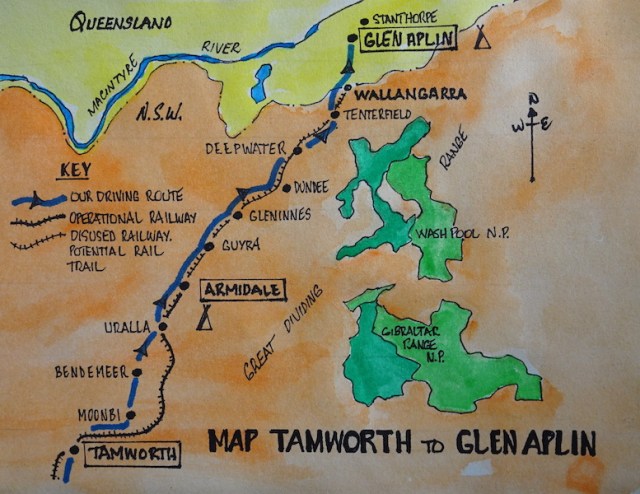
Map showing the first day of our trip north to ride the Brisbane Valley Rail Trail.
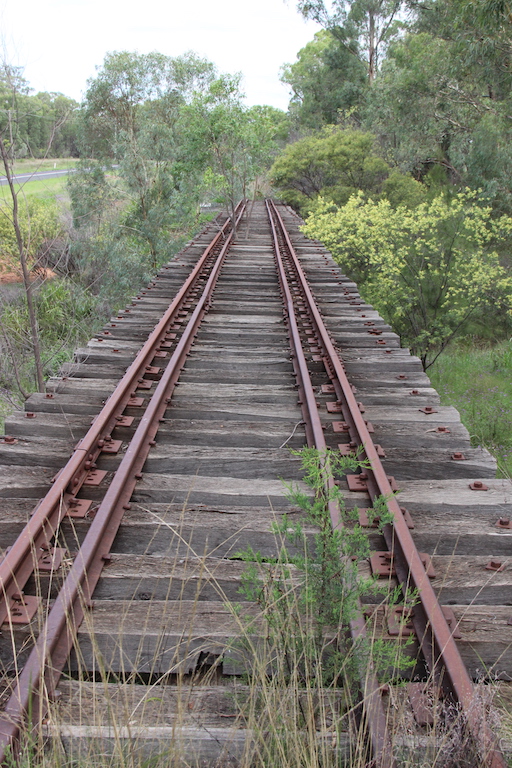
A typical abandoned railway waiting to be turned into a rail trail.
For some years now there have been rumblings that the abandoned line should be turned into a rail trail and if it were, we would be the first to take to it. Unfortunately, there are conflicting views as to the future use of the line; there are those who say they want the line retained as an historical line with steam trains and/or the resumption of passenger services to the border; there are others who see the benefits of it becoming a recreation trail for bicycles and walkers. From my observations, if you give people a safe traffic-free trail they will be on it, as soon as it is finished.
At Deepwater we took lunch by the council weeds unit building. Through the fence we chatted with the weeds officer and discussed the problem weeds of the area. Tussock, Love and Coolatai grasses came up in discussion. Eventually Caltrop (catheads) became the topic. Cathead seeds are always a worry for the cyclist as the plants have a three-pronged seed that can penetrate most bike tyres. Fortunately, there were no catheads where we were going (but we were watching for them just the same).
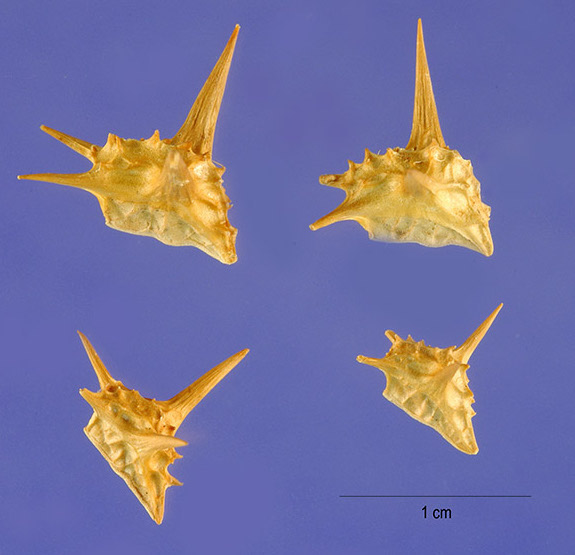
Cathead (Tribulus terrestris) seeds. No matter which way they fall there is always a spike pointing upwards. Image credit: Steve Hurst @USDA-NRCS PLANTS Database via Wikipedia.
Catheads are a native of southern Eurasia and Africa and grow profusely in warm temperate regions. There was a house built over a cathead patch near to where we live and when it was demolished to make way for a new house the cathead seeds, lying in wait for fifty years, germinated. Such is the tenacity of the dreaded cathead.
Few bike tyres on the market are cathead resistant. The only ones that appear to be resistant are German brand Schwalbe tyres. They are expensive but having them on your bike eliminates having to do repairs when on the road. Repairing a leaky tube is annoying especially if it’s getting dark and it’s raining.
Dusk comes early at this time of the year and at day’s end we were set up in a caravan park just to the south of Stanthorpe. The park was adjacent to the Stanthorpe weir, and I considered it expensive at $30 per night for an unpowered tent site. The most objectionable aspect was the necessity to buy firewood at $16 for a small bag. And then it was extremely difficult to light as the logs were big and partly green and there was not a twig or a stick to be had anywhere for kindling.
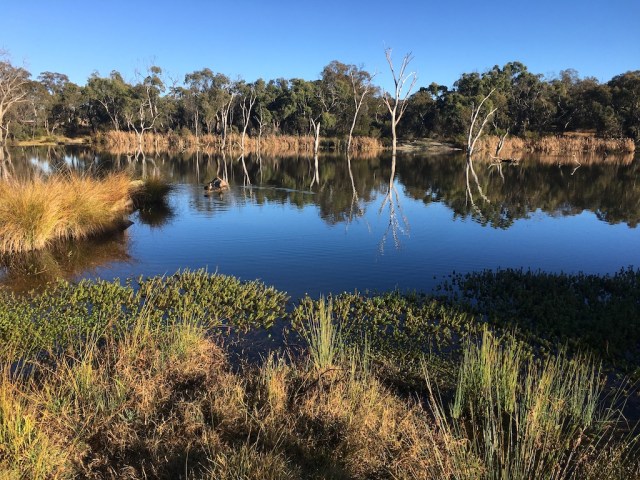
The view from our camp at Glen Aplin.
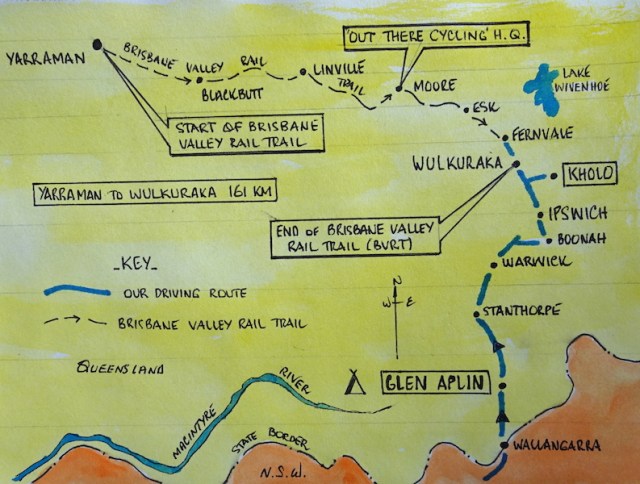
Map showing our route from Glen Aplin to the Ipswich region and the BVRT.
Boonah was our next destination where we considered leaving the car with a friend while riding the Brisbane Valley Rail Trail. We would then ride from Boonah to the end of the trailhead near Ipswich, a distance of about 45 kilometres. However, seeing the hilly country around Boonah we decided it would have been too challenging a ride with loaded bicycles on the road to Ipswich where there was no verge and a lot of traffic. Bearing these difficulties in mind we pushed on to Ipswich to look for a place to leave our car. The end of the rail trail is at Wulkuraka, a suburb of Ipswich, but I felt there was nowhere there to leave the car securely for the duration of our ride.
Our next thought was to drive north to Fernvale, another town along the BVRT. The car park adjacent to the tourist information centre has security cameras and people leave cars there overnight but I wasn’t too keen on that course of action for a possible five nights. It was getting late and we were getting desperate for a place to camp and leave our car. Then a bolt of hope came out of the blue. Bev had placed a request on the BVRT Facebook page asking for a place to leave the car. The next thing we knew we were taking up residence in the spare room of Debbie and her husband Wayne’s house. What a windfall it was for us, one minute with nowhere to leave our car, let alone somewhere to sleep the night, and now in comfort and with like-minded company. Debbie and Wayne are great advocates of friendship and the four nights we had with them were pleasurable (two nights before the ride and two nights at the end).
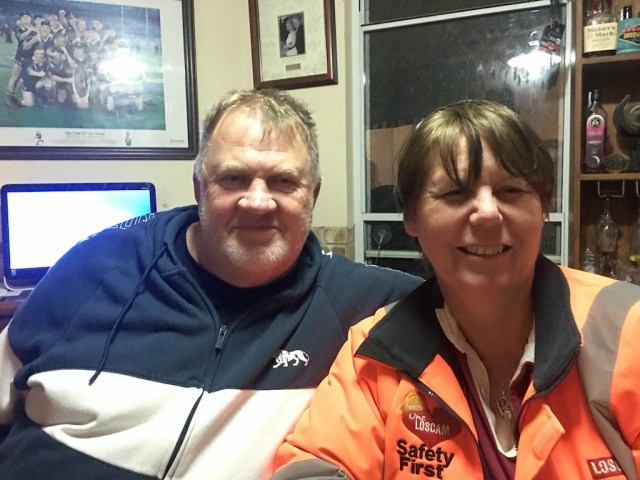
Fantastic hosts Wayne and Debbie
When we first arrived their cats came and checked us out. One cat, Poh, jumped up on the trailer and sniffed every square centimetre of our bikes and gear and when we unloaded our gear Sazzles swung into action.
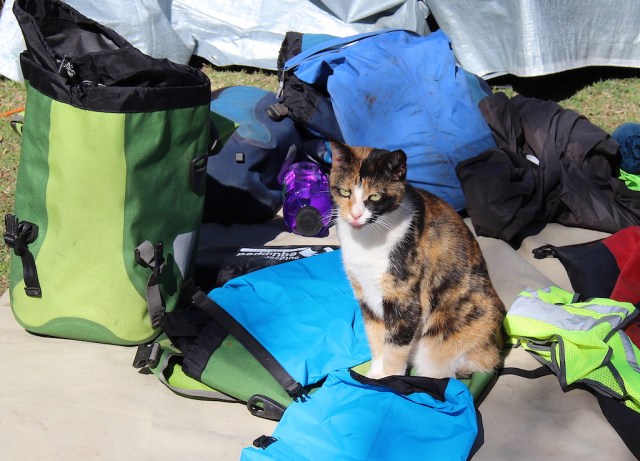
Poh checking our gear
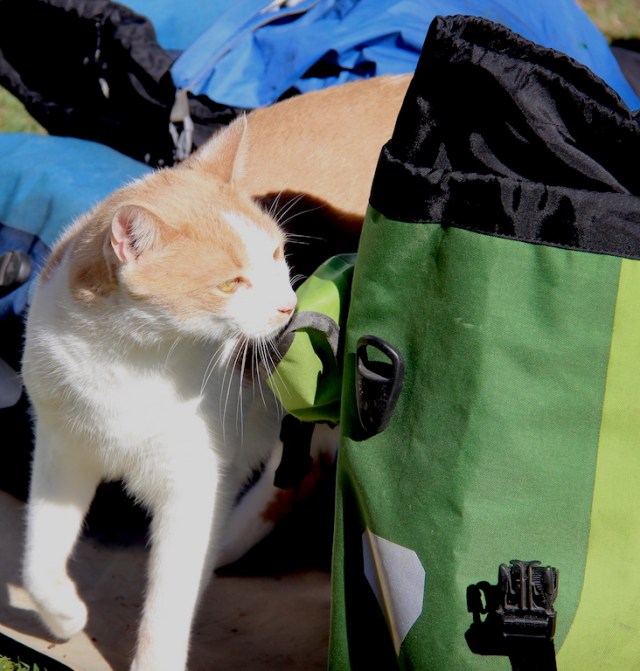
Sazzles checking our panniers.
Both Bev and I were puzzled as to why Debbie and Wayne took us in at short notice and even though they do not belong to the Couchsurfing organization their hospitality was akin to spontaneous couchsurfing. It later became apparent that both Debbie and Wayne were advocates of bikepacking; they have electric bikes and have ridden parts of the BVRT a couple of times.
The following day was spent preparing our bikes and camping equipment. Our bikes were loaded onto Debbie and Wayne’s car ready for an early start the next morning. Not only did they supply us with a bed and meals but they delivered us to Wulkuraka (the end of the BVRT) where we were to be collected by Out There Cycling, a shuttle bus service which would take us and our bikes to the start of the rail trail at Yarraman.
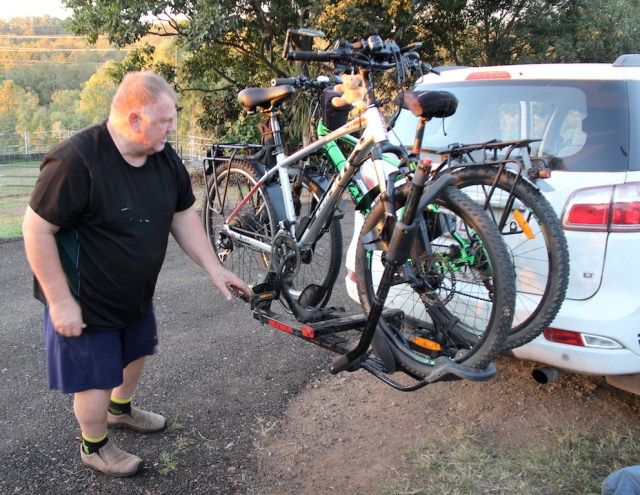
Wayne, securing our bikes to the rear of his car.
DAY 1 YARRAMAN to BLACKBUTT.
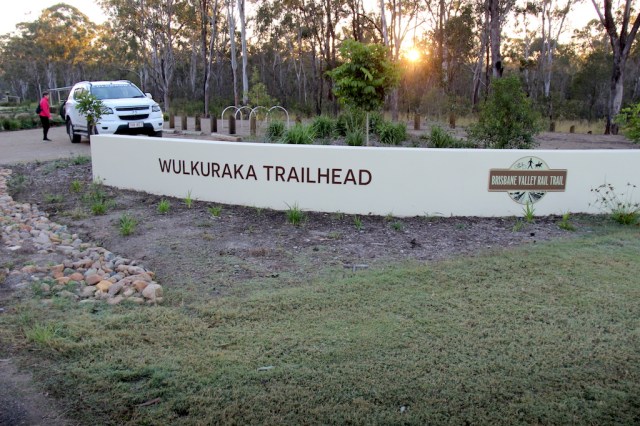
Sunrise departure at the end of the Brisbane Valley rail trail.
Departure day began early for us as we were to be on the road by 5-30am. Debbie, our ‘out of the blue’ host, took us to the trailhead at Wulkaraka where our bikes were placed on a specially built trailer behind a minibus.
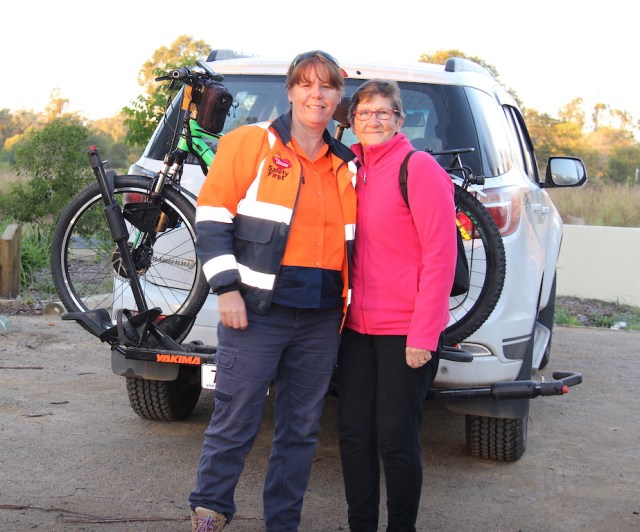
Host Debbie and Bev at the trailhead at Wulkaraka.
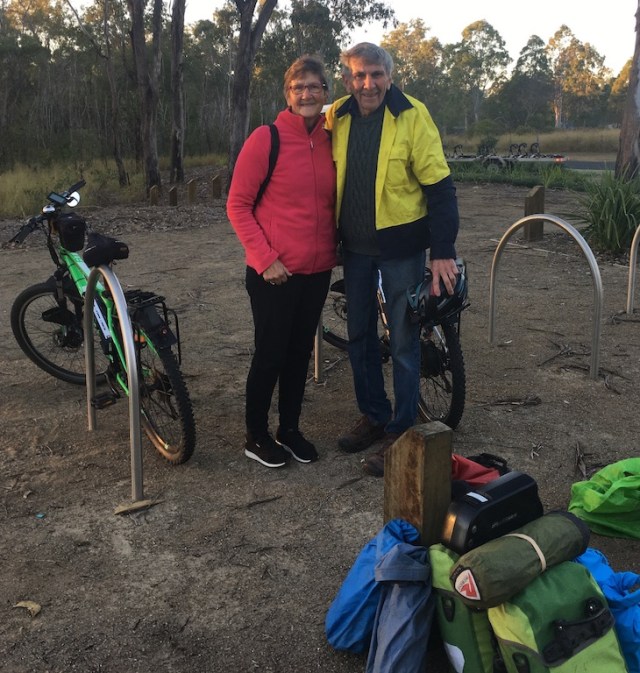
Waiting to be picked up by ‘Out There Cycling’.
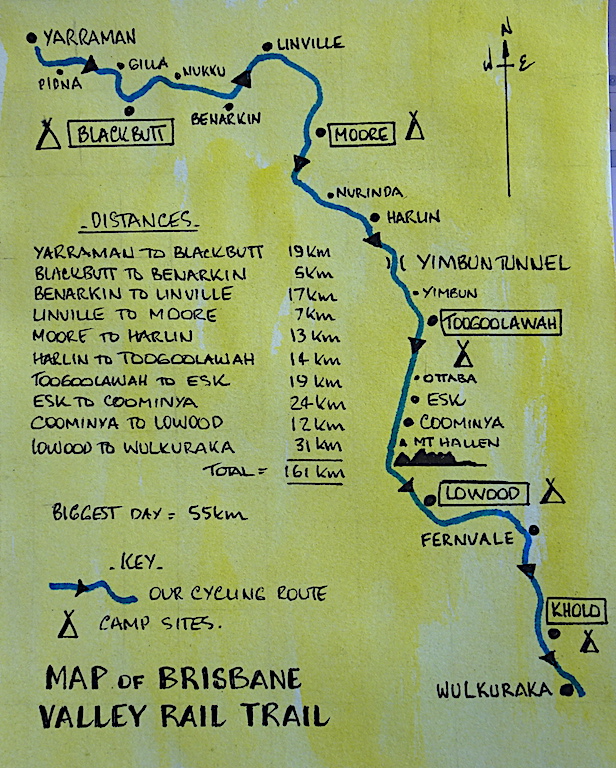
Map showing the Brisbane Valley Rail Trail.
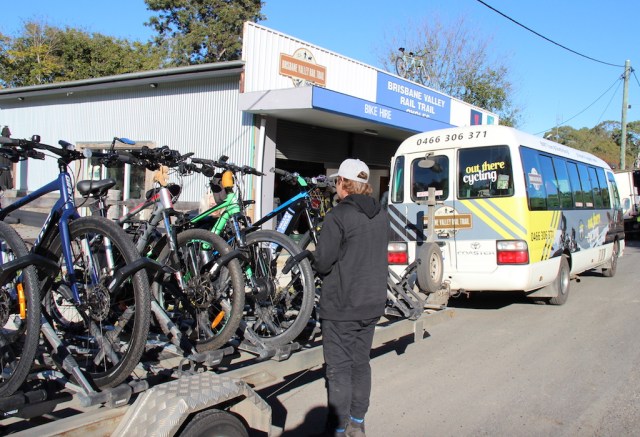
The Out There Cycling HQ at Moore, part way up the trail.
On the bus we met Ed and a friend who were hiring bikes and riding the trail in comfort, staying in hotels along the way, whereas we were doing it tough and camping!
At Yarraman our bikes were unloaded and we made ready to go. It took about an hour to load our bikes, because of conversations with other bike riders sharing riding experiences in Europe and Australia.
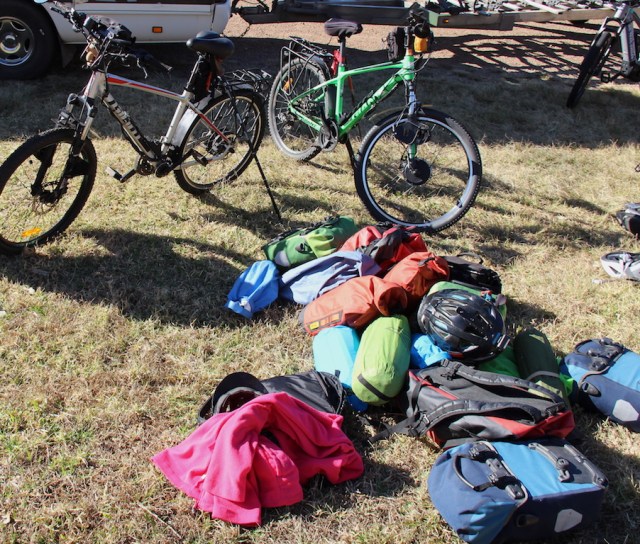
Our bikes and gear at Yarraman, the start of the trail going south.
Before setting off on the trail we had a late breakfast at Yarraman Bakery. One thing I found of note in Yarraman was the evolution of an Aussie backyard….a timber outhouse (dunny), a corrugated iron rainwater tank, plastic wheelie bins and a ladder.
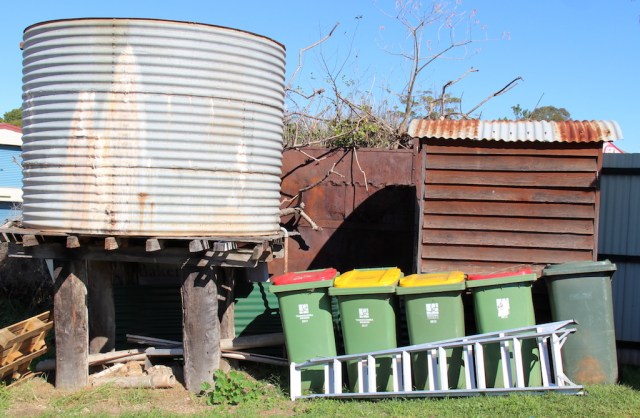
A dunny, a corrugated iron rainwater tank, wheelie bins and a ladder at the rear of the Yarraman Bakery.
Finally we started south along the BVRT. The track was rough in parts and creek crossings had no bridges so it meant a steep descent and ascent on all of them. There were many bone-shaking grids that were best to cross at speed. Along the way there were some fine stands of blackbutt (Eucalyptus pilularis) and towards the village of Blackbutt I’m sure there were silky oak trees (Grevillia robusta). At another point we came across some stands of grass trees (Xanthorrhoea resinfera). The resin from grass trees was used by Aboriginal peoples as a glue in conjunction with fibre lashings to fix stone axe heads to wooden handles and in my childhood my father mixed a brew of the resin with kerosene and used it as a French polish.
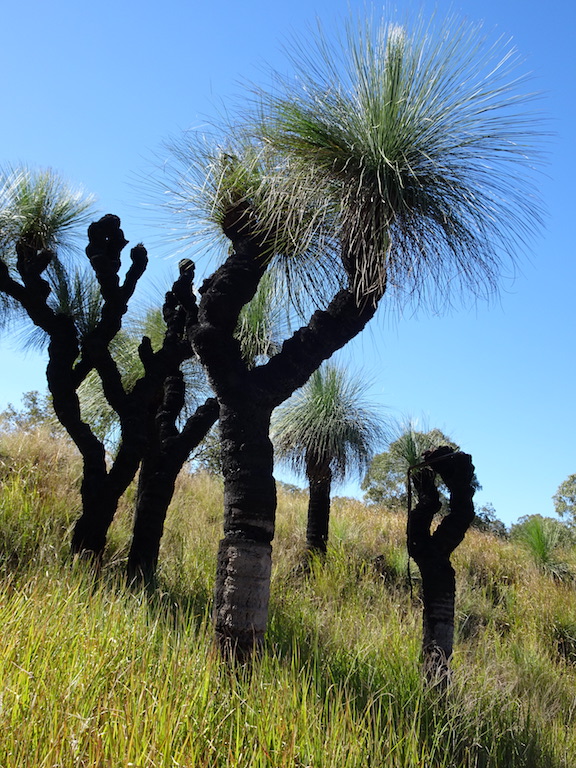
Sculptured grass trees (Xanthorrhoea species) against a brilliant blue sky.
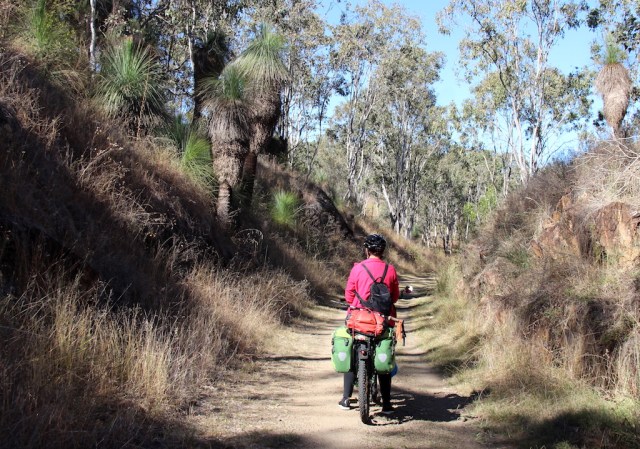
Grass trees in a rail cutting.
There were some bad washouts and rills and crossing them or running with them took a little skill with a loaded bike. However, we handled it and made it to the town of Blackbutt. Our camp was at the Show Society campground and even though it was crowded we found a good isolated spot next to a shed. Show societies are non-profit organisations and the best thing about them is the minimal fee charged, only $16 for the two of us and there was copious amounts of hot water to wash away the ills of the day’s rough ride.
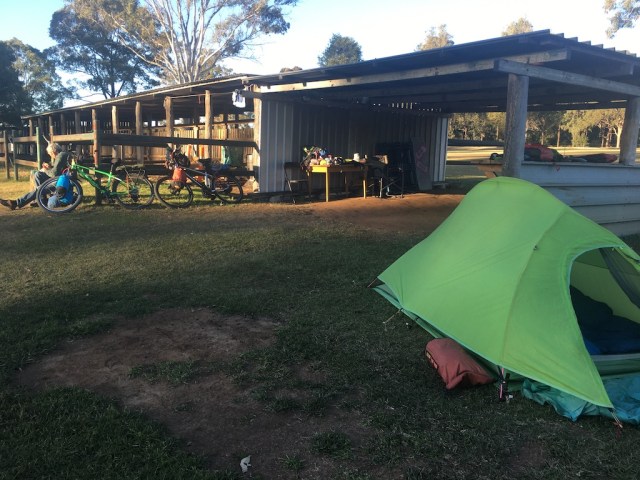
The Blackbutt showground camp.
At the local café we ordered pizza, which was large, delicious and freshly made. There is debate as to whether pizza is considered junk food; some nutritionists say if it’s commercially made and thawed it is, whereas handmade pizza with healthy toppings is much more nutritious.
While having our pizza several people spoke with us, ‘where are you going and you are coming from.’ One lady told us an interesting story about her recent double lung transplant and upon enquiring she told us her condition was caused by being underground in the gold and coal mines in central Queensland. I asked what she was doing underground because I assumed underground mining was usually men’s business. It turned out she was a surveyor’s assistant and after working underground for many years, emphysema developed. I then asked what her life was like now, does she appreciate life more and her reply was a definite yes. I suggested to her it was like being in a heavy storm and coming out into clear blue skies. She agreed.
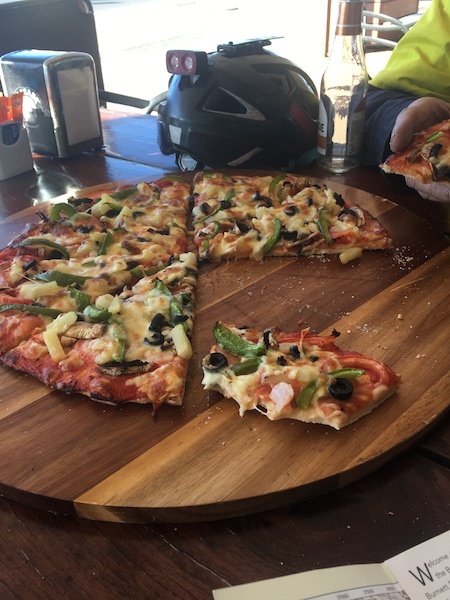
Hand-made pizza. When travelling with a bike food is forever on your mind; if you are not eating it you are thinking about it.
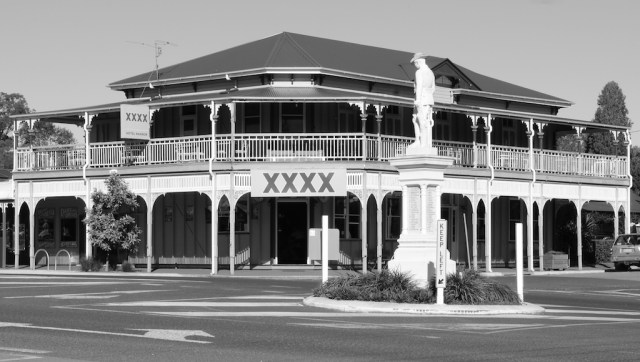
Blackbutt’s Hotel Radnor, a classic Australian pub, shares an intersection with the Blackbutt WW1 memorial.
Like many other towns in Australia WW1 memorials stand proud in the main streets to remind passers-by of the sacrifices made by diggers in the Great War, the war of 1914-1918 that was supposed to be a war to end all wars. The Blackbutt digger is standing at ease with one hand on a tree stump, very fitting for a timber town like Blackbutt. Digger is a term applied to Australian infantrymen and the word comes from the fact that when under enemy fire they dug trenches into which they concealed themselves.
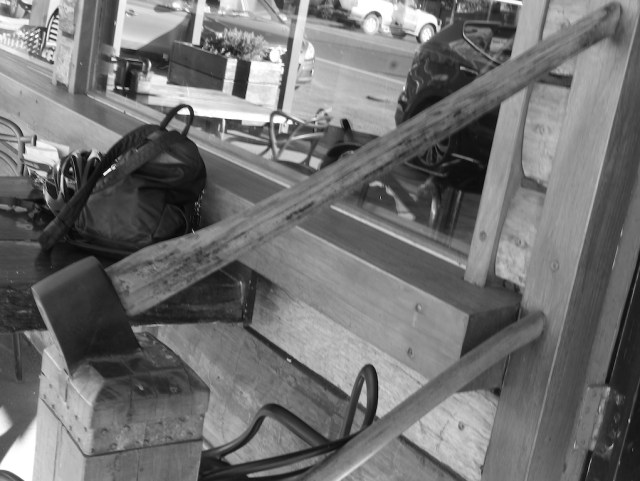
The café’s steps with axe handrails.
Back at the showground camp we moved our tent into the shed as it was going to be cold and having the tent undercover meant that it wouldn’t be as wet next morning. In the shed there was a movement sensitive light and when on it only stayed on for about fifteen seconds. This meant we were continually waving, moving and dancing in front of it. I guess there was a way of bypassing the light sensor, something I will have to find out about.
DAY 2 BLACKBUTT to MOORE
The only thing that could be said about the first night’s camp was ‘it was bloody cold’. Normally I survive on five hours sleep so being in bed and reading by 7-30 made for a long cold night. At home one can get up and have a cuppa but when bikepacking and it’s cold one simply lies there and thinks. Lying fully awake at 3-00am and waiting for the sun to rise was a pleasure as I didn’t have Delhi belly, a toothache, the flu or a cold or any other aches and pains, it was bearable! The morning temperature was around minus one; there was a frost, however a nearby horse trough had no ice on it so it wasn’t much below freezing. Bev had a cuppa in bed, her hand came out of the tent and the cup of tea disappeared.
It was a slow pack up as we wanted to get the tent dry before leaving and anyway, we had the rest of our lives to get wherever we were going. On the way out we spotted some small wooden boxes sitting on milk crates along a fence. What were these miniature houses? It turned out they were native bee boxes. A woman came out of a shed and we spoke to her at length, she actually did most of the talking, and we listened with interest. Native bees are not big producers of honey, they produce around one kilogram of light watery honey a year, but the honey is sold for around $1000 a kilo. Not a bad return on a small box of around four to five thousand bees. There are over 1700 species of stingless native bees in Australia.
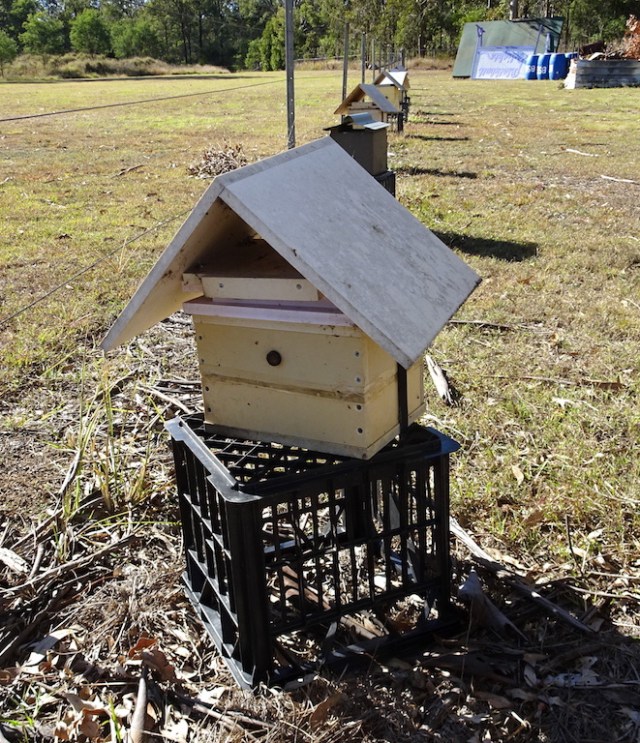
Inexpensive native bee boxes.
The bees do not stir in the morning until the temperature is around 18 degrees so we didn’t see any as it was still cold. Native bees are sought after for the fertilisation of crops as they do not travel more than a couple of kilometres seeking pollen. If a hive is placed in the centre of a crop the farmer can be sure only his plants are fertilized. Introduced bees (European) will travel up to six kilometres seeking pollen so they may bypass a crop by seeking a more plentiful supply of pollen.
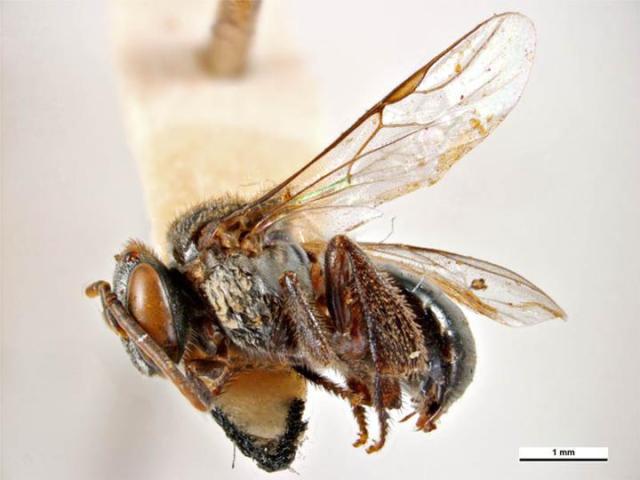
A native bee (Tetragonula hockingsi) drone. This chap is about five mm long. Image credit: Ken Walker Victorian Museum via Wikipedia.
The species in the above image was named in honour of Harold J Hocking who documented early observations of Australian stingless bee species; his notes were published in 1884.
On our property we once had a native beehive in an old fence post but it went, I do not know where. The Blackbutt bee lady is going to send me information about native bees and when she does, I might get into establishing a native bee colony on our property once more. One thing I have noticed of late is a distinct lack of bees and insects in our vegetable garden, which means our plants are very poor producers. Maybe a native bee box in the garden will overcome the problem.
The town of Blackbutt is named after the blackbutt eucalypt tree (Eucalyptus pilularis) which grew profusely in the area and harvested for its timber. There was one growing near the bee boxes, which caught my eye because it was joined to a smooth-barked gum. The question was, were they two separate trees or by a freak of nature had they become one. I asked around and nobody could tell me, neither the bee lady nor the caretaker of the campground.

Is this one tree with two trunks or two separate species of trees that have grown together?
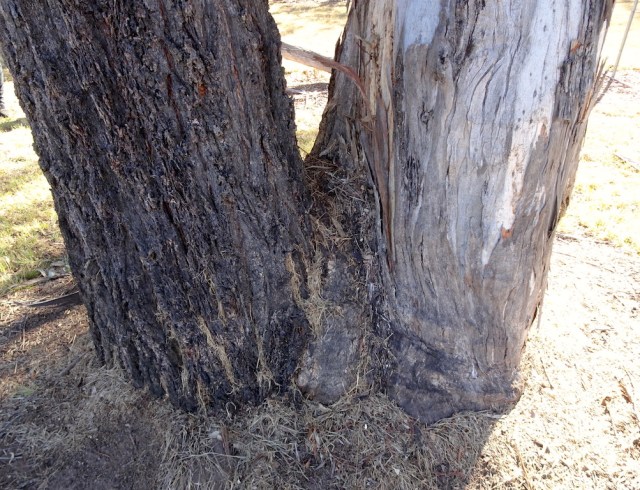
The base of the ‘married’ tree.
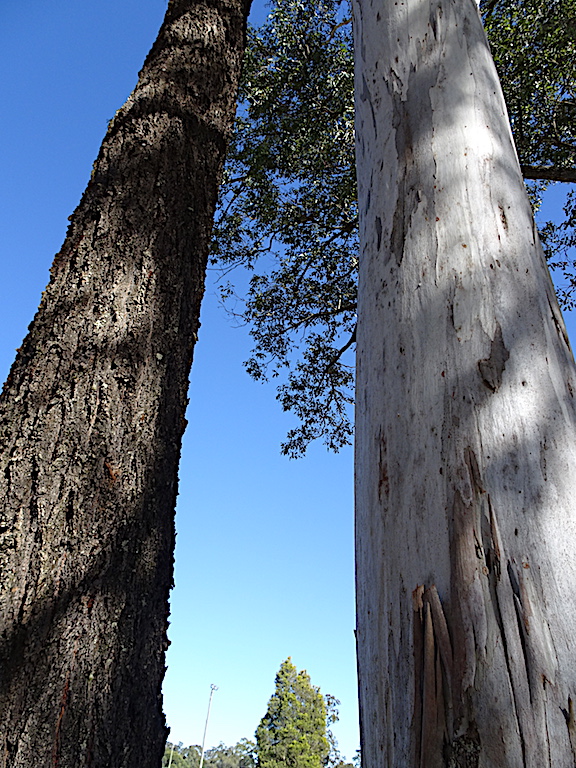
The ‘married’ tree with two distinct trunks.
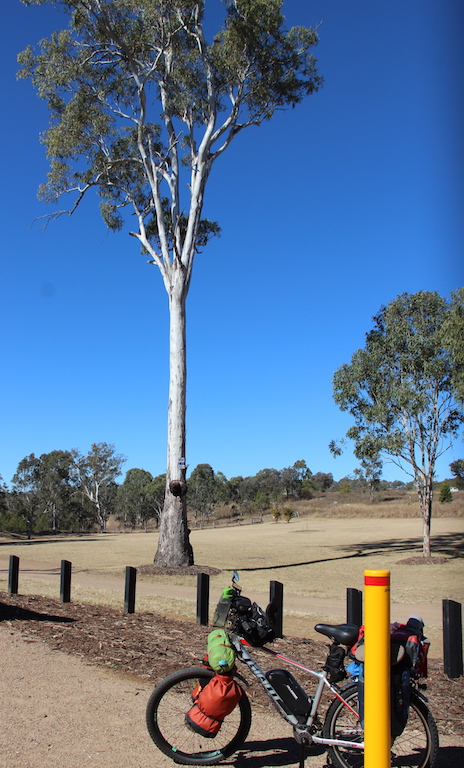
A lone blackbutt (Eucalyptus pilularis)
Blackbutt is a most valued eucalyptus timber and it grows in the northern coastal regions of NSW and coastal forests of southern Queensland. The scientific name is Eucalyptus pilularis and it gets its name from the Latin word for ‘a small pill’, which refers to the shape of the fruit. Blackbutt is ‘half bark’, which means it has rough, fibrous bark on the lower trunk with the upper trunk and branches normally being smooth and whitish to yellow in colour.
There is nothing guaranteed when it comes to the surface of the rail trail in the northern section, one minute you are on smooth compacted granite, then next on rough ballast. The idea is to keep moving and if you do you are more prone to staying upright. Albert Einstein was quoted as saying ‘Life is like riding a bicycle. To keep your balance, you must keep moving’. You were right, Albert. Staying upright is relative not only to the surface of the path but also to how much gear you are carrying and how low your centre of gravity is.
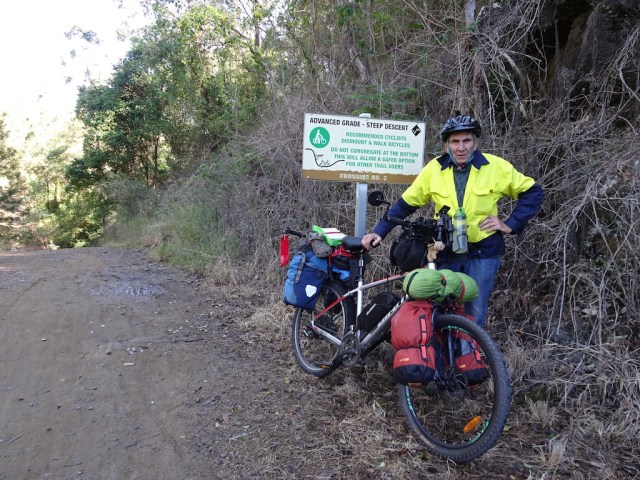
A warning sign at the steep crossings.
The warning sign at creek crossings indicates cyclists should not stop and have a chat at the creek bottom as some riders zoom down and out without dismounting. The speed hogs carry no equipment and many I am sure are on speed runs in an attempt to set records.
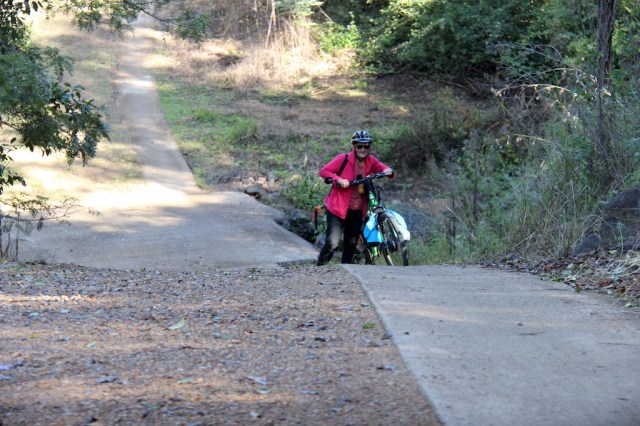
Bev slogging up a 20% grade after crossing a creek.
Moore was our next night’s camp. We passed through Linville where there were many RVs and caravans. We did however stop at the local shop for refreshment. The Moore camp was an unusual one for us, it was in a public park adjacent to a council ablutions block. Bev and I felt a tad exposed but once it was dark nobody would have known we were there. Nearby was a family camped with an open fire, which we were immediately attracted to, and we chatted till late.
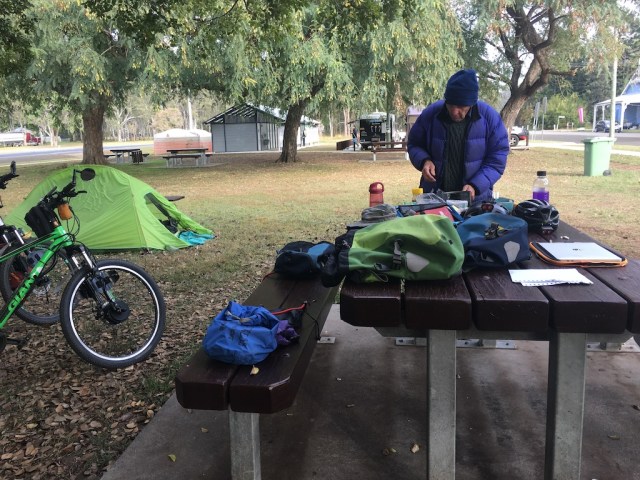
A cool morning in the Moore park.
DAY 3 MOORE TO TOOGOOLAWAH
Opposite the park at Moore was the Kai Lounge and the owner Kara was most accommodating as she allowed me to charge our bike batteries at no cost. The café was what would be called in modern day language ‘cool’. The cafe had an alternative theme to it, with many books on Buddhism, alternative lifestyle living and health. Breakfast at the café was of an organic nature and suited us fine.
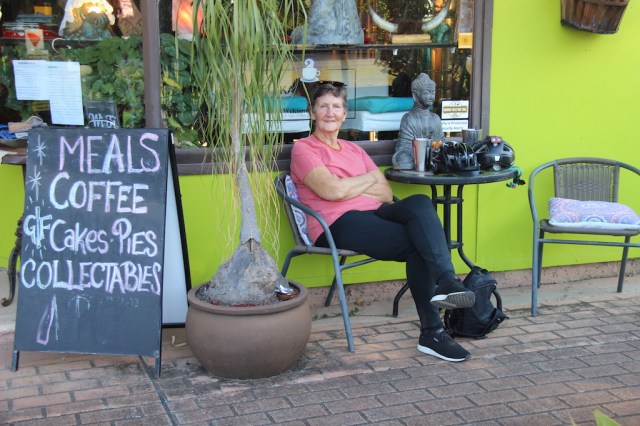
Bev taking coffee outside the Kai Lounge at Moore.
A month after we were there the café was broken into and the business owner Kara sustained a serious leg injury requiring an operation and months of rehabilitation. Unfortunately, the café remained closed for some time, a loss to the riders on the rail trail.
NB. However, at the time of posting this, the cafe has reopened.
The trail from Moore was compacted granite in some places and in other places it was rough and stony. The rough sections needed a lot of concentration as a wheel into the gravel meant careering off into the scrub or down a steep bank. The condition of the trail depends on how enthusiastic the councils are in maintaining the trail. Not all locals want a bike path going past their property and there have been reports of nails, tacks and screws being strewn on other trails causing flat tyres.
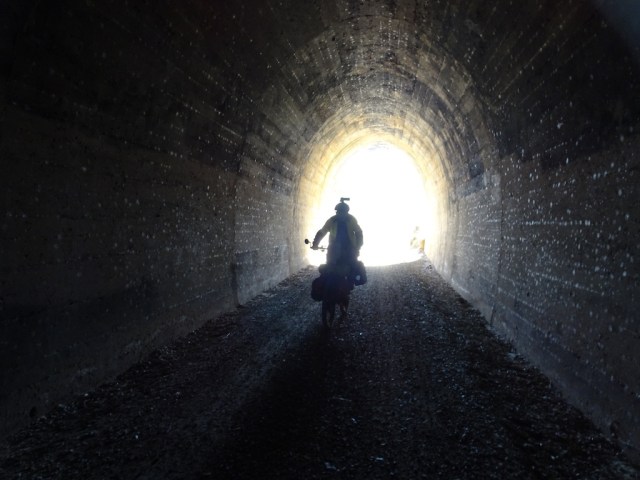
The Yimbun tunnel, the only tunnel on the BVRT between Harlin and Yimbun.
The Yimbun tunnel is one hundred metres long and was built by day labourers between 1909 and 1910. The longest operational rail tunnel in the world is the Gotthard Base Tunnel in Switzerland at fifty-seven kilometres long and the longest purpose-built tunnel for cyclists and pedestrians is in Norway and is approximately three kilometres long.
At one point we rode through a rainforest and past some bora rings. The periphery of the rings was hardly discernable but I got the picture. Indigenous people created bora rings thousands of years ago; the rings were formed by scraping grass and topsoil away and forming a miniature levee around the ceremonial circle. The sizes of the rings varied but were mostly around ten to twenty-five metres in diameter. The following image shows a bora ring.
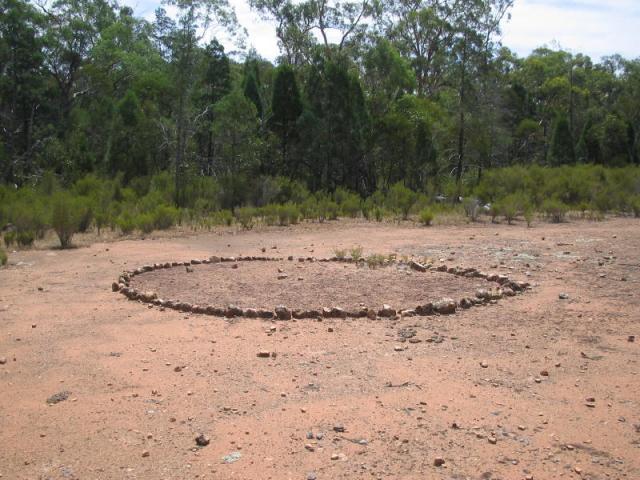
Bora ring Image credit: Robert via Flickr
This section of the rail trail required intense concentration so as not to go off into the loose gravel. One is obliged to stay on the tyre track about 200mm wide as any deviation meant going into loose gravel which could result in a nasty fall. It appears to me that in parts the rails and sleepers had been removed and the ballast left and formed into a bike path. I thought some of the section was really a mountain bike track and the deep crossings with 20 to 25% grades in and out with loose gravel meant dismounting and pushing the bikes to the top in places. Fortunately, we have hand throttles and with careful throttle manipulation all you have to do is walk beside the bike and the motor will actually pull you and your bike to the top of the rise.
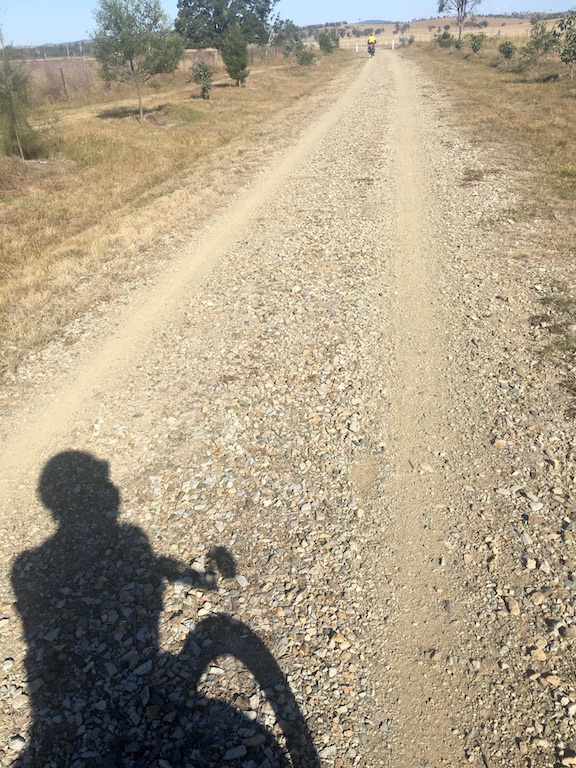
Gravel track
By mid afternoon we found ourselves in the Toogoolawah showground. Tent sites could be secured there for $20 a night. The showground was spacious so where to camp was the question. First, one has to determine where the sun will rise, especially on freezing mornings, then one wants to camp by a table otherwise it’s grovelling on the ground when preparing meals. At the site we chose there was a floodlight with a switch: bliss. It turned out we found a table right where the early morning sun would beam its warming rays.
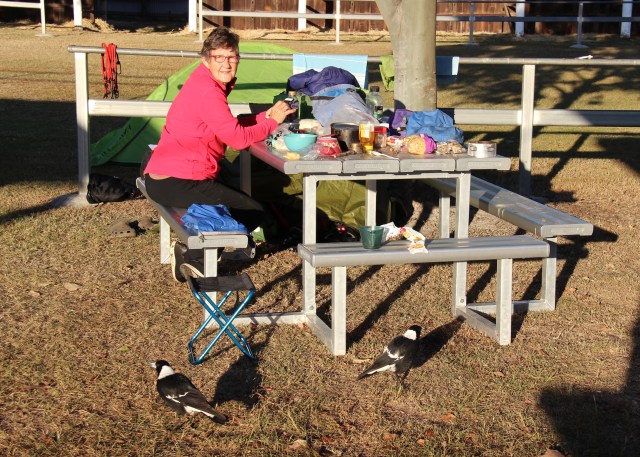
Communing with magpies at the Toogoolawah Showground camp.
DAY 4 A REST DAY IN TOOGOOLAWAH
Rest days are welcome. A day off the saddle is a relief for the posterior. The first chore was to visit the library and hook up to the internet, I wanted to research bora rings, native bees and blackbutt eucalypt trees. After a brief encounter with the modern world we headed for the Have-a-Chat café and to our delight grilled barramundi was on the menu. When bike riding it is necessary to have one or two good meals a day. Breakfast oats with dried fruit and nuts followed by a ploughman’s type lunch is adequate and at night (or for lunch) a good meal is necessary to keep up one’s strength.
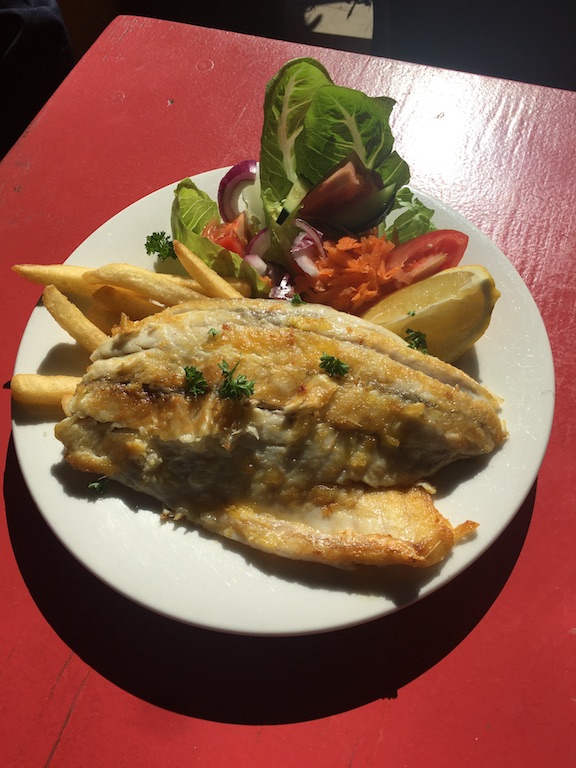
A tasty meal at the Have A Chat café in Toogoolawah
The highlight for the day was meeting with Lester and Killer, two old blokes who had worked on the BVRT seventy years ago. Both were fettlers and not afraid of hard work. Fettler is a Welsh word for someone prepared to take his coat off and get his hands dirty. After talking with them we were more informed as to how hard work won the day, pushing through cuttings, excavating tunnels, filling in valleys and building bridges. Today most people ride the trail without giving thought to the blisters, aching backs and misery that old blokes like Lester and Killer experienced. Killer acquired his nickname from the fact that he was a professional boxer in his youth, having had success with a total of thirty-five knockouts.
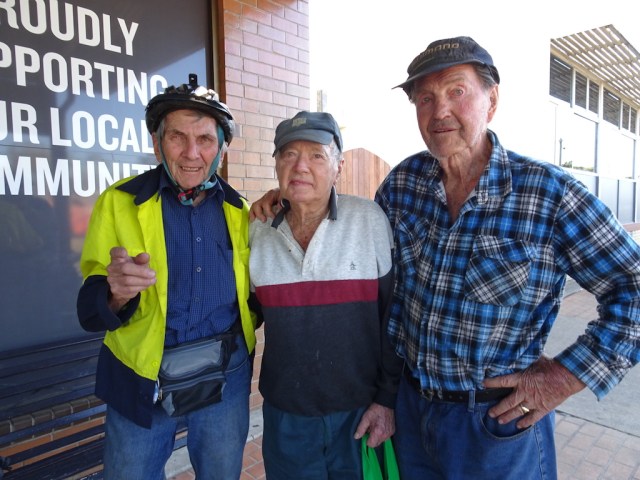
The two old fettlers I met, Lester (centre) and Killer.
Back at camp we heeded the sign ‘Watch out for Snakes’ in the ablution block. My understanding is that frogs go into the loo and seek out a moist damp spot to set up camp. The toilet pedestal is their preferred spot, and then snakes go in after the frogs. It wouldn’t be much fun when sitting and a snake appears from below you; it would be worse than a redback spider on the toilet seat (as the song goes).
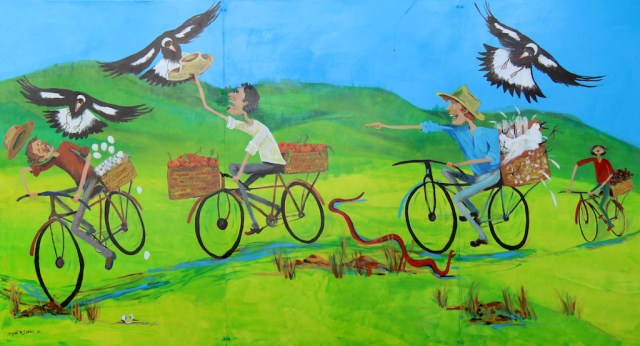
The warning sign to watch out for…magpie attack and snakes!
DAY 5 TOOGOOLAWAH to LOWOOD.
The sun rose on our tent and over breakfast we communed with the magpies, butcher birds and crows. We managed an early start and were on the road by nine.
The trail from Toogoolawah was a mixed bag, sandy, graded, perfect and rough. Some steep creek crossings necessitated dismounting at the bottom and walking our bikes to the top. I have come to the conclusion that one steep creek crossing is equivalent to around five kilometres of flat pedalling, energy-wise that is.
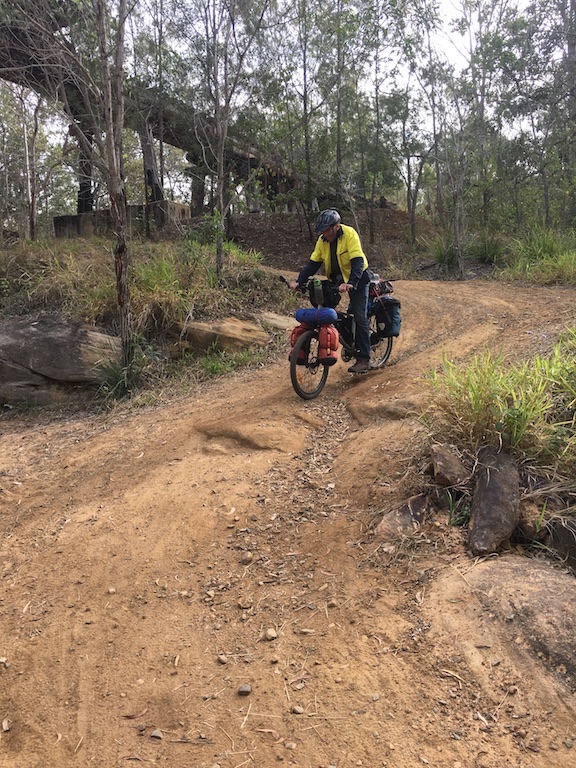
Coming into a deep creek crossing.
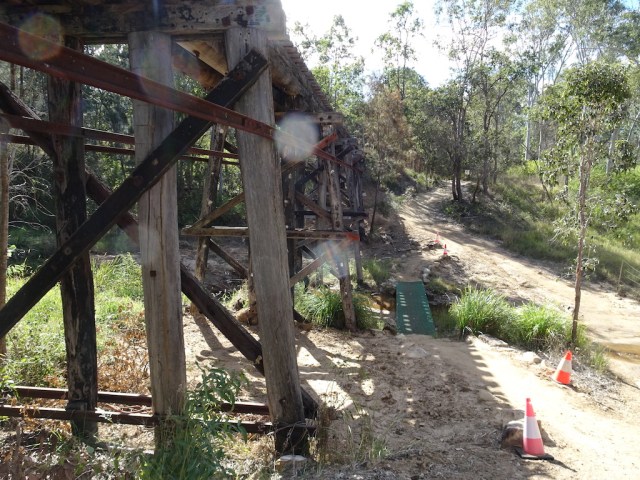
A creek crossing between Toogoolawah and Lowood. If the authorities ever restore the bridges the BVRT would be a much easier ride, but maybe not the challenge for the hardened cyclists.
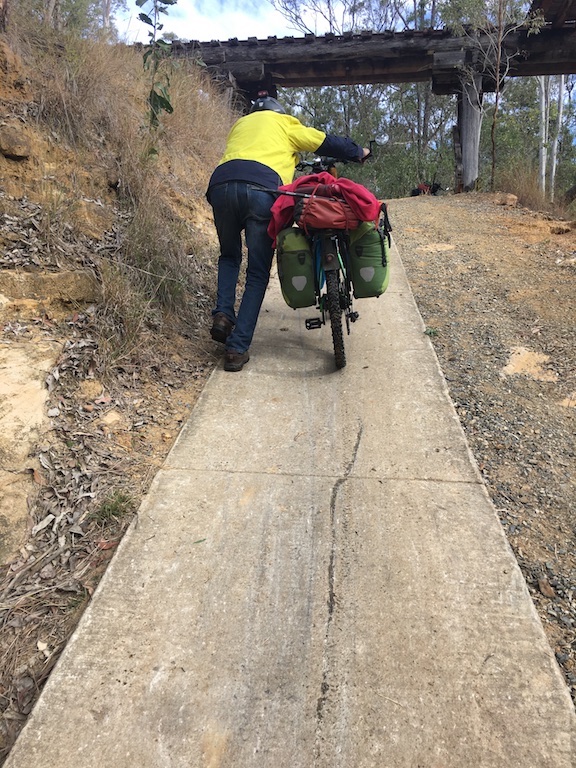
Fred taking Bev’s bike up the steep slope of a creek crossing.
At Esk during morning tea we topped up the charge on our batteries. This was the first charge during the day that we did. Our aim was to ride to Lowood, a distance of 55km and had to be sure that our batteries would still have charge. Unpowered pedalling and loaded bikes would be too much for us oldies.
From Esk we continued on to Coominya and there we spoke with a young woman with two toddlers who told us ‘the other five are at school’. I gave the two toddlers a squashed banana, they didn’t seem to mind that it was squishy. Bananas are hard things to carry on a bike, they are prone to bruising especially if the trail is rough. I must add that the mother of the seven children didn’t look old enough to have borne the rigours of childbirth seven times. The young mum’s husband arrived on the scene and I have to admit he was a tad rough on the corners however he went out of his way to give us detailed directions of the trail ahead. They were friendly and helpful, the sort of people who would have offered us a space for our tent had we asked and possibly ended up inside their house sitting at their table eating with their tribe.

Coominya station
The 12km ride from Coominya to Lowood was a breeze and the best part was the entrance to Lowood. For nearly a kilometre the path is lined with a magnificent assortment of native trees and shrubs, providing colourful flowers and habitats. Established in 2006 by a gardener planting a small screen for his adjoining property the plantings continued and now include threatened species sourced from around Australia. It is known as the Lowood Beautification Project.
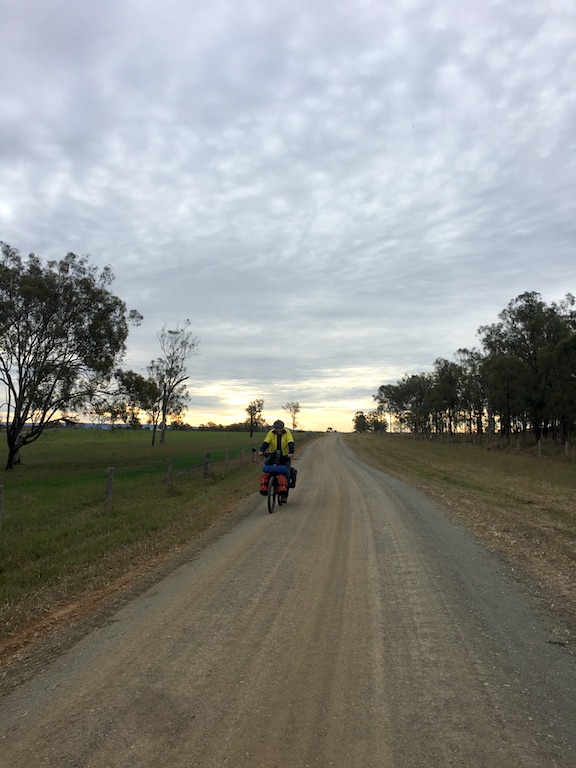
An easy ride from Coominya to Lowood in the late afternoon sun.
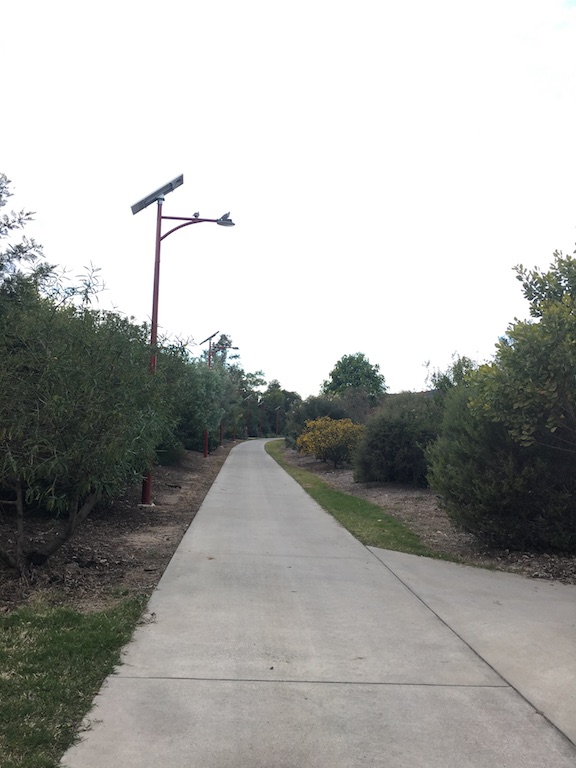
The path into Lowood is lined with an assortment of Australian native plants.
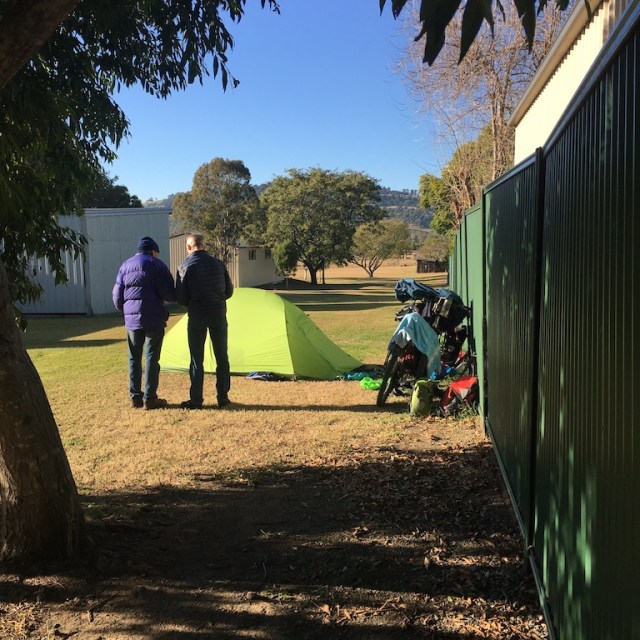
Lowood showground campsite
The caretaker of the Lowood showground provided us with a tent site and the nearby Hotel Lowood provided us with an excellent evening meal.
DAY 6 LOWOOD-FERNVALE-WULKURAKA
The final morning of our trail ride began very frostily (around zero) and we decided to go to the local café for breakfast. Unpacking the food pannier is a pain when it’s cold, one’s fingertips verge on frostbite. At the café we struck up a conversation with Peter who informed us he was riding the BVRT to get in training for an alpine ride in northern Italy in a few months. He had been watching the BVRT Facebook site and he knew who we were as soon as we spoke to him. A photo of us had been posted by one of the bike riders we had met the day before.
A woman walking part of the trail was very interested in our efforts and after showing her my concertina book of our 2019 Observations from the Saddle of a Bike Odyssey we talked at length about the benefits of travel. Unfortunately, the lady in question is unable to travel much as she is the carer for her brother who is intellectually challenged. Upon enquiring about her brother, she told me that when he was a three-year-old, he had a playground accident and from that day has been severely disabled. From what I gather the disabled brother has one desire and that is to attend the Tamworth Country Music Festival. I invited her to come and bring her brother and stay with us, it remains to be seen if the visit eventuates.
At Fernvale we stopped for morning tea and whilst supping on coffee in the park a lady approached us and said she had put two and two together ‘and I think you are Fred and Bev riding the BVRT’. That’s us. During the conversation she told us she used to ride the trail on horseback but she had difficulty mounting a horse these days. Both Bev and I never realised that when travelling with a horse or donkey one needs to pay attention to weight. Lightweight camping gear is required and in addition, hay and oats are also required to feed the horse along the way. I told Sue about the Robert Louis Stevenson trail in France. Stevenson travelled from Le Puy to Florac with a donkey in 1878 crossing the Cevennes and he wrote a book ‘Travels with a Donkey in the Cevennes’. I suggested if the local library cannot get it she try for a second hand copy with ABE Books. Sadly we parted with another of the many strangers crossing our path along the BVRT.
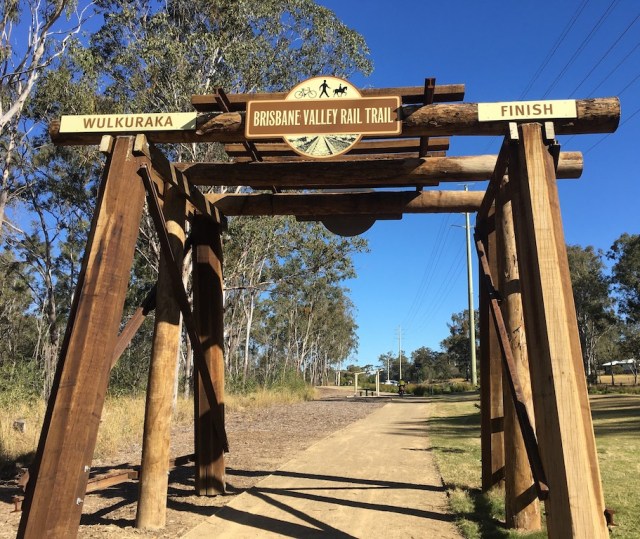
The trail head at Wulkuraka.
At the trail end Wayne was waiting for us and again he loaded our bikes onto his rack and drove us back to his property, cooked us a meal and chatted about the trail and its difficulties and pleasures.
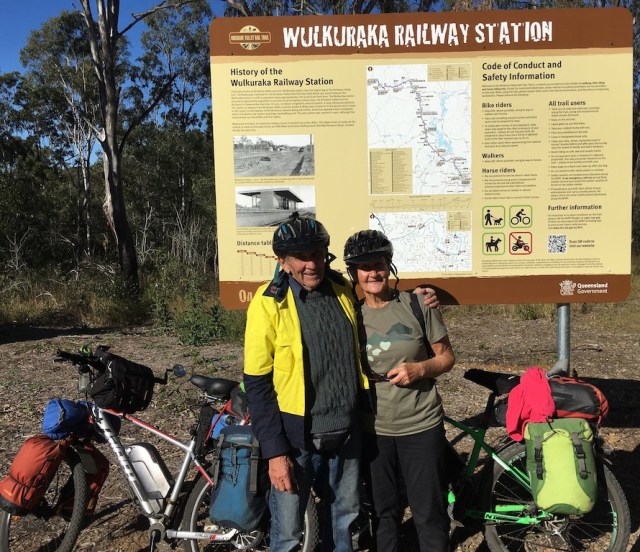
Mission complete. At the end of the Brisbane Valley Rail Trail.
The BVRT is not a simple or easy ride due mainly to the sometimes rough surface, steep descents and ascents in and out of creeks. It is not a jolly jaunt, it’s more of a challenge, especially if you are carrying a full kit of tent, mattress, sleeping bags, cooking gear and tool kit. Bev’s favourite part of the journey was from Toogoolawah to the end, mostly because of the smoother surface for most parts of it. On the completed ride we fortunately didn’t have any flat tyres, the only problem was one broken spoke on Bev’s bike.
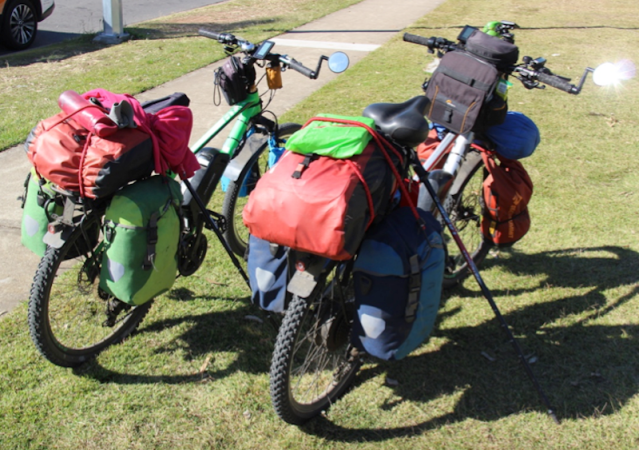
This is our full kit.
Overall, even though riding the BVRT was a challenge, we both enjoyed it immensely and plan to ride it again in the future.
On returning home the planning for our next bike riding journey begins.
If you have enjoyed this post make a comment and remember, every day is a gift…enjoy it and if you haven’t a bike get one and enjoy the ride through life.

 Fred and Bev's Odyssey
Hi Fred. I’m the woman you met near Fernvale. I enjoyed reading your BVRT blog nearly as much as I enjoyed hearing first hand, a very abridged version of your travels in 2019. I’d love to chat more about a Tamworth opportunity. What’s the best way to get in touch? Lisette
Hi Zettie
Good to hear from you. I have as you know answered you via your email. Looking forward to seeing you in January.
Fred and Bev
Hi Fred and Bev,
Your blog popped up on The Northern Rivers Rail trail Facebook site. Well done on your ride on the BVRT. Great to see Tamworth people exploring north . Maybe one day we will see read about your adventures on The Northern Rivers Rail Trail which is close to where we now live!
Best wishes
Rod and Shauna Stoker
Hi Shauna and Rod
Thankyou for your comment on tbeartravels. Riding the BVRT was and adventure and we would like to ride it again some time but incorporate other trails to the north. Yes we have the Northern Rivers Rail Trail in our sights but at the moment it is far too hot for such an undertaking, all one can do at the moment is go our=tside and work around the place until about 11-00 then beat a retreat inside and blog, write etc until the next day comes around.
Hope to catch up with you when we head north next in 2024.
Fred and Bev
You are both an inspiration and it was an absolute pleasure hosting you both. Looking forward to following you both on your next adventure.
Hi Debbie
Thank you and Wayne for your help and enabling us to complete the BVRT successfully, without your help it would have been less of a pleasure. Since riding the BVRT we have done a three more trips with bikes. One to the Pilliga Forests to the west of us and another to the south of Sydney around Picton and Katoomba and the latest was to Port Macquarie on the coast. Bev and I hope to be up your way in the winter of 2024 and if so we will look you up. In the meantime if you want a trip please come and see us.
Regards Fred and Bev